

Serendipity might’ve brought you here, but there’s a solid reason you care about what generation you’re in – it shapes how you talk, work, date, even how you fight about money with your parents or your kids. In this guide, I walk you through age groups, traits, and those big differences that quietly run your life, using clear examples so you can say “ohhh, that’s why I do that”. I’ll also point you to this handy breakdown of Boomers, Gen X, Gen Y, Gen Z, Gen A and Gen B explained so you and your friends can finally settle who’s what without arguing in group chat.
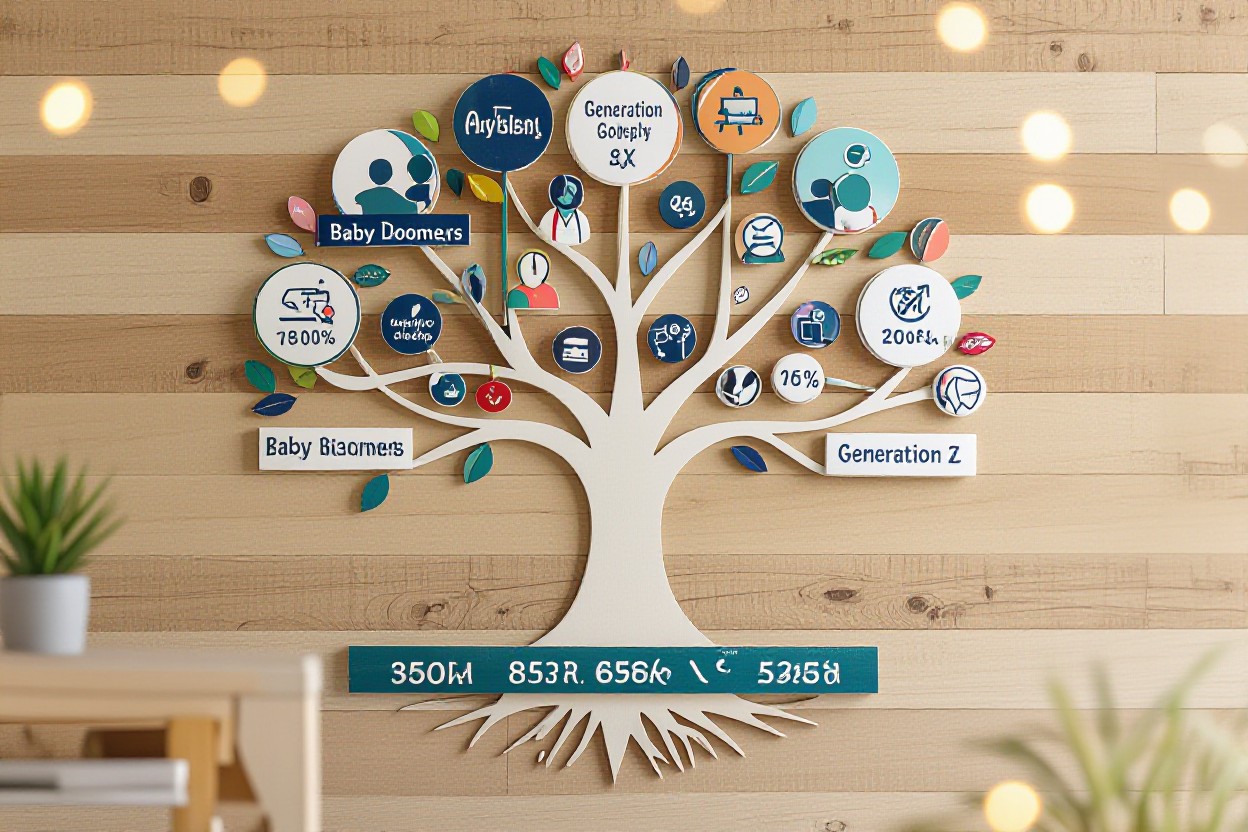
So, What’s a Generation Anyway?
Instead of being a strict scientific label, a generation is more like a shared playlist of experiences, tech, and turning-point events that shape how you think about work, money, relationships, and even memes. Researchers usually track these in chunks of roughly 15-20 years, because people born in those windows go through the same big stuff at the same ages. That shared timing is what makes you feel oddly understood by people your age and slightly alien around everyone else.
Breaking Down the Age Groups
Rather than random labels, these age groups follow patterns tied to real dates and events: Silent Generation (born 1928-1945), Baby Boomers (1946-1964), Gen X (1965-1980), Millennials (1981-1996), Gen Z (1997-2012), and Gen Alpha (2013 and later). Each group hit key life stages during specific shifts like postwar growth, the 70s energy crisis, the 2008 crash, or the social media explosion. That timing is why your attitudes around careers, debt, and stability can feel wildly different from your parents’.
The History Behind Generations
Instead of being a modern marketing gimmick, generational thinking goes back to early 20th-century sociologists like Karl Mannheim, who argued that people shaped by the same historic events at the same age form a shared mindset. Later, researchers like William Strauss and Neil Howe popularized labels like Millennial and Gen X in the 90s. Those names stuck because they tied concrete birth years to major turning points like World War II, the Cold War, and the digital revolution.
What makes this history so interesting is that it started as a way to explain why groups of people reacted so differently to the exact same world. Mannheim was watching how those who came of age before World War I clashed hard with those who hit adulthood right after it, and he realized it wasn’t just “personality”, it was timing. Strauss and Howe then pushed this further in the 1990s, arguing that generations often follow rough cycles, where one cohort grows up during crisis, the next during rebuilding, and so on.
For example, Baby Boomers (1946-1964) entered adulthood during massive postwar expansion, suburban growth, and the rise of TV culture, while Gen X kids sat through the 70s energy shocks, rising divorce rates, and the early stages of globalization. That contrast alone explains a ton about why your Gen X boss might be more skeptical of institutions than your Boomer parents. When you line up birth years with events like the Vietnam War, the fall of the Berlin Wall, 9/11, or the 2008 financial crisis, the “personality” of each generation suddenly looks a lot less random.

My Take on Millennials: Are They Still the “Entitled” Generation?
I still think about a meeting where a 26-year-old calmly asked for remote work, a learning budget, and feedback every month – the Boomer in the room nearly choked on his coffee. That moment pretty much sums up why people still slap the “entitled” label on Millennials. In my view, what looks like entitlement is usually expectation shaped by coming of age during the 2008 financial crisis, skyrocketing tuition, and a job market that demanded degrees but offered unpaid internships.
Common Traits We See
I keep seeing the same patterns with Millennials in teams I work with: they crave flexibility, they value experiences over stuff, and they care about whether their work actually matters. Many juggle student debt that can top $30,000, so they question low-paying “entry-level” roles that still ask for 3-5 years of experience. You’ll also notice strong digital instincts, side hustles, and a surprising mix of burnout and ambition sitting side by side.
The Good, the Bad, and the Ugly
I once coached a Millennial manager who built an insanely engaged team but kept clashing with upper leadership about timelines and boundaries. That story captures the best and worst of Millennial traits colliding with older systems. You get empathy, innovation, and bold conversations about mental health, but also impatience, job hopping, and frustration when growth feels slow. In practice, it’s not entitlement in a vacuum – it’s a reaction to broken promises about careers, housing, and stability.
What really jumps out at me in the “good” column is how freely Millennials talk about mental health, burnout, and toxic workplaces, which has pushed companies to introduce things like mental health days, hybrid work, and more humane policies. On the flip side, managers still complain about longer onboarding curves, softer conflict tolerance, and turnover rates that climbed past 30% in some industries, especially in tech and marketing roles. Then you’ve got the ugly part: Millennial finances, where wages lagged while housing prices climbed over 120% in some cities, so of course they push back on outdated advice like “just work hard and buy a house”. If you strip away the stereotypes, what you really see is a generation trying to negotiate fair terms in a game where the rules quietly changed on them.
Gen Z: The Digital Natives – What’s the Deal?
Compared with millennials quietly swapping flip phones for smartphones, Gen Z arrived with a touchscreen practically in the crib. Born roughly between 1997 and 2012, they grew up with YouTube, Instagram and TikTok as a default setting, not a novelty. I see this group blending online and offline life so tightly that you sometimes can’t tell where one ends and the other starts, and that shapes how you lead them, market to them, and even how you gain their trust at work.
What Sets Them Apart
Unlike millennials who watched the internet evolve, Gen Z never knew a world without Wi-Fi and social feeds, so they process info fast and multitask across 4 or 5 screens like it’s nothing. I notice they’re intensely values-driven too, calling out brands over ethics in a 15-second Story. And while people say their attention span is shrinking, I see something different – their filter for boring, inauthentic stuff is just brutally efficient.
The Impact of Technology on This Generation
Because their first instinct is to Google, DM or scroll, tech shapes how Gen Z learns, works, dates and even defines identity. I see teens building businesses on TikTok at 17 while also battling anxiety tied to constant comparison, notifications and news. And when your social circle, entertainment and side hustle all live on the same phone, it’s incredibly efficient but also incredibly hard to unplug.
What really jumps out at me is how tech gives Gen Z ridiculous leverage and heavy pressure at the same time. You have 19-year-olds pulling in 5-figure months from Shopify stores, learning skills from free YouTube tutorials that used to need a degree, yet they’re also checking their phones over 80 times a day on average and sleeping with it next to the pillow. Social platforms become their career ladder, their social proof, their portfolio – and if those numbers dip, your self-worth takes a hit too. So when you work with Gen Z, you aren’t just dealing with employees or customers, you’re dealing with people whose entire social, financial and emotional ecosystem is wired through a screen that never really turns off.
The Boomers: Not Just a Stereotype
Everyone jokes about Boomers and Facebook memes, but I keep running into Boomers who built startups in their 50s, learned coding at 60, or picked up TikTok just to follow their grandkids. Born roughly between 1946 and 1964, they grew up with post-war optimism, saw the moon landing live on TV, and watched pensions vanish in the 80s and 90s. That mix of prosperity and volatility trained them to be ridiculously persistent, even if their communication style sometimes clashes with yours.
Key Characteristics
People love to say Boomers hate change, yet they literally lived through the birth of color TV, personal computers, the internet, and remote work. Many of the managers you report to were shaped by 60-hour weeks, office-first culture, and long-term employer loyalty that often wasn’t returned. You see this in their strong work ethic, preference for phone calls over Slack, and that instinct to “pay your dues.” When you understand that, your conflicts at work suddenly make way more sense.
Lessons Learned from Baby Boomers
It’s easy to roll your eyes at “back in my day” stories, but buried in there is gold about survival, money, and relationships. I’ve learned that Boomers treat stability like oxygen, because they watched inflation spikes, layoffs, and entire industries disappear. Many of them quietly maxed out 401(k)s, bought modest homes, and avoided high-interest debt long before it was trending on TikTok. When you borrow those habits selectively, you get the upside of their experience without copying their burnout-level grind.
What really hits me when I talk with Boomers is how many of them played the long game while everyone else chased quick wins. One former boss told me he bought stock through every crash from 1987 to 2008, even when colleagues swore the market was “never coming back,” and that boring habit turned into a seven-figure retirement cushion. You might disagree with their style, but you can’t ignore the pattern: save early, invest consistently, show up when it’s not fun, and keep your word longer than is convenient. And if you combine that with your own boundaries, tech skills, and flexibility, you basically build a version of success that’s more modern but still anchored in proven, real-world resilience.
The Silent Generation: Who Are They and Why Should We Care?
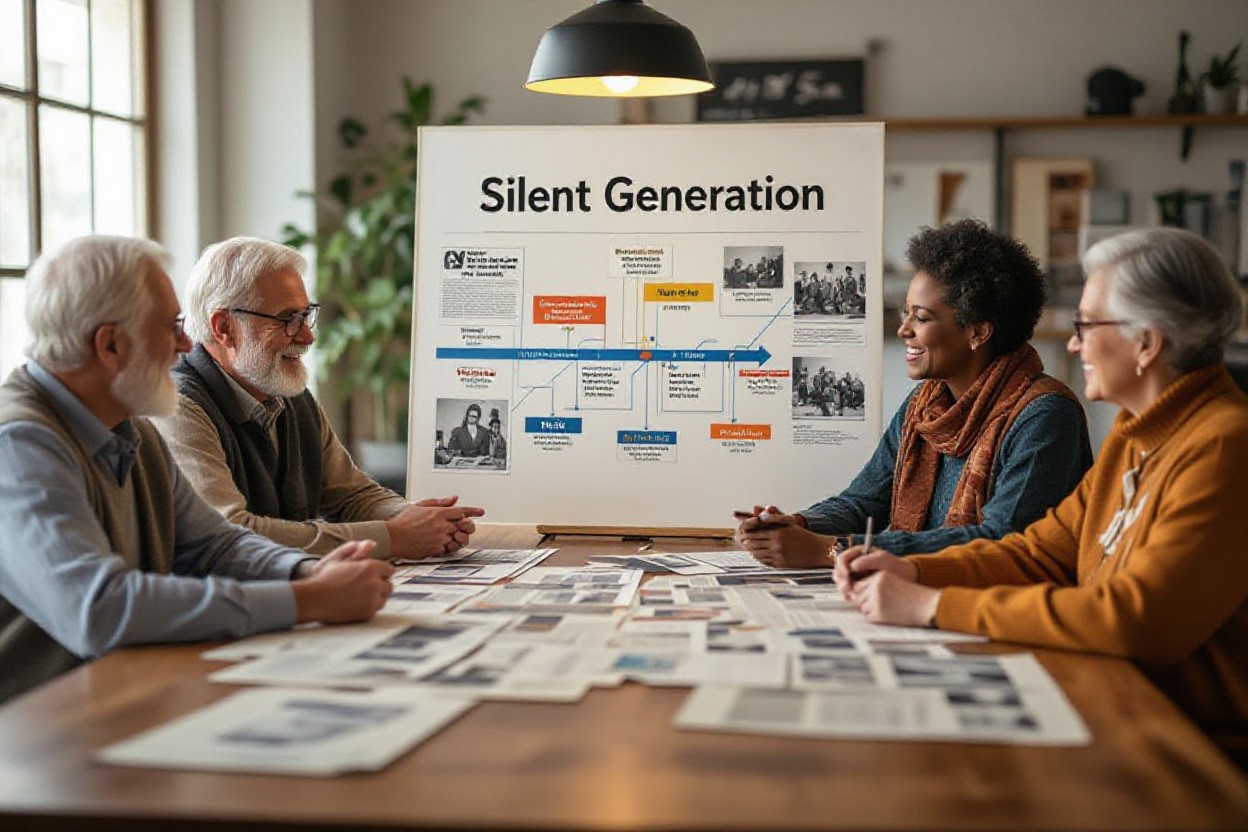
Few people get this, but the Silent Generation (born roughly 1928-1945) might be the toughest group you and I will ever study in modern history. They grew up with the Great Depression, rationing, and World War II shaping their worldview, then quietly built families, careers, and institutions in the 1950s and 60s. I often see them mislabeled as passive, yet they delivered steady leadership in government, medicine, and business while avoiding the spotlight. That quiet stability you sometimes take for granted at work or in your community – you can usually trace it back to them.
Important Traits
What stands out with Silent Generation folks I’ve worked with is how reliably they show up. You see a strong respect for hierarchy, loyalty to employers, and an almost automatic sense of duty that feels rare now. Many were shaped by strict parents, wartime newsreels, and church or community rules, so they tend to value restraint over self-promotion. They might not shout their opinions on social media, yet their discipline, frugality, and long-term thinking still anchor a lot of families and organizations you move through every day.
Contributions to Society
When you check the receipts, the Silent Generation quietly changed the world under the radar. They supplied a huge share of the soldiers in Korea and early Vietnam, then filled the ranks of teachers, engineers, nurses, and managers that powered the postwar boom. Many of the CEOs steering Fortune 500 companies in the 80s and 90s, the judges shaping modern legal norms, and the researchers advancing early heart surgery and vaccines were born in the 1930s. That low-drama, sleeves-rolled-up attitude translated into infrastructure, institutions, and social stability you still benefit from, even if you’ve never attached their name to it.
Digging deeper, you see their fingerprints on very specific stuff: the interstate highway system in the US was largely planned and built by engineers and project managers from this cohort, and a lot of the mid-century housing your grandparents talk about was financed and constructed under their watch. In boardrooms, Silent leaders like Warren Buffett (born 1930) set enduring norms around value investing and long-term strategy that your favorite startup founders still study. In public service, they staffed city councils, school boards, and civic groups that kept things running while louder generations argued on TV. And in your own life, there’s a decent chance the steady grandparent quietly paying for your college fund or helping with childcare is Silent Generation, converting decades of steady saving and low debt into opportunities you treat as normal.
Honestly, What’s Next? The Future of Generations
Have you ever wondered if future generations will even make sense as neat labels anymore, or if it’ll all just blur into one hyper-connected crowd? I keep seeing how tech adoption cycles are shrinking and how 12-year-olds are already using tools that didn’t exist 18 months ago. So you’re not just watching trends, you’re living inside them, where climate anxiety, AI at work, and shifting family structures all mix. That means your “generation” might be less about birth year and more about which tech, crises, and cultural shifts you grew up syncing with.
Predictions for Gen Alpha
What happens when a kid’s first instinct is to talk to an AI before they even learn to type? I see Gen Alpha growing up with AI copilots in school, personalized learning apps doing what textbooks never could, and friendships that start in Roblox or Fortnite before the playground. They’re likely to be insanely good at context-switching yet more vulnerable to screen fatigue and mental health struggles. And you might notice they’ll expect brands, schools, even parents to be way more transparent, inclusive, and fast.
How Future Generations Might Differ
What if the biggest generational divide soon isn’t age, but how comfortable you are collaborating with AI, automation and global teams you’ve never met in person? Future generations might care less about “career ladders” and more about portfolio lives with multiple income streams, mixing freelance, remote, and passion projects. I think you’ll also see stronger lines between those who adapt to climate-related disruption and those who don’t, shaping everything from migration to dating. Values could tilt hard toward resilience, mental health, and sustainability, rather than titles or traditional status.
When you zoom in a bit more, future generations might define identity way less by nationality and far more by online communities, fandoms, and shared problems they’re solving together, like climate or AI ethics. You could have a 16-year-old in Lagos and a 40-year-old in Berlin who feel more “aligned” than two neighbors on the same street, simply because they live in the same digital spaces. I also expect the gap between “tech fluent” and “tech dependent” to grow – some kids will know how to build, automate, and secure systems, while others mostly just consume and get shaped by algorithms. That split alone could create a new kind of class divide, where those who actually understand the tools have way more power, options, and stability than those who only scroll and swipe.
To wrap up
Ultimately, how wild is it that a simple birth year can shape so much of how you see the world, your work, your tech habits, even your jokes? When you know which generation you fall into, you start spotting patterns in your own reactions to change, to money, to career… and it all feels a bit less random.
I want you to use this generational lens as a tool, not a box. You’re more than a label, but if you get why Boomers, Gen X, Millennials, or Gen Z lean a certain way, you can communicate smarter, pick your battles better, and make your life a lot easier.
FAQ
Q: Why is everyone suddenly asking “What generation am I?”
A: Over the past couple of years, TikTok, Instagram and even LinkedIn posts have turned generational labels into a kind of identity badge, so it’s no surprise people are going “wait, am I Millennial or Gen Z?” Generations used to be more of a sociologist thing, but now they show up in memes, marketing and workplace conversations, which makes the lines feel way more personal.
A big reason you’re seeing this everywhere is that tech and culture shifts are happening faster, so people born just a few years apart can feel like they grew up in totally different worlds. On top of that, brands and employers keep targeting “Gen Z” or “Boomers”, so folks want to know where they fit – and whether those stereotypes actually apply to them or not.
Q: What are the main generations by birth year and age group right now?
A: The labels vary slightly depending on which researcher you ask, but there are some common ranges people use in everyday talk. Traditionalists or the Silent Generation are usually born before 1946, Baby Boomers land around 1946-1964, Gen X is around 1965-1980, Millennials (aka Gen Y) are roughly 1981-1996, Gen Z about 1997-2012, and Gen Alpha is 2013 and later.
Age-wise right now, that means Silent Generation folks are in their late 70s and older, Boomers are mostly in their 60s and 70s, Gen X is mid 40s to late 50s, Millennials are late 20s to early 40s, Gen Z is early teens to mid 20s, and Gen Alpha is still kids. These are soft boundaries, not iron-clad rules, so if you feel caught between two groups, that’s pretty normal.
Q: What are the core personality traits and lifestyle vibes for each generation?
A: Silent Generation adults often grew up in or right after wartime, so you see a lot of themes like duty, stability, being careful with money, and a very “do the work, don’t brag about it” mindset. Baby Boomers came of age with big social movements and economic growth, so they get tagged as optimistic, hardworking, loyal to employers, and sometimes a bit skeptical of rapid change.
Gen X tends to be described as independent, resourceful and a bit “whatever, I’ll figure it out” because many grew up as latchkey kids with early internet. Millennials are often associated with collaboration, purpose-driven work, flexibility, side hustles, plus a love-hate relationship with social media. Gen Z leans into digital fluency, authenticity, mental health talk, social awareness and a strong filter for BS in advertising.
Gen Alpha is still forming its identity, but it’s the first group fully raised on touchscreens and smart devices from birth. So you’ll likely see even more comfort with tech, short-form content, and very blended online/offline lives as they get older.
Q: What if I feel like I don’t fit my generation’s stereotype at all?
A: That’s super common, and honestly it’s a sign you’re paying attention instead of just swallowing labels. Generational traits are broad patterns, not a personality test, so they can’t possibly capture your family culture, country, community, or the random events that shaped your life.
If you were born right on the edge of two generations, you might hear the word “cusper” – like a Millennial/Gen Z cusp – and that can explain why you feel pulled both ways. But even if you’re smack in the middle of a generation and still don’t relate, that just means you’re… you. Use the generational stuff as a lens to understand trends, not a box you have to squeeze into.
Q: How did technology shape Millennials, Gen Z, and Gen Alpha differently?
A: Millennials basically grew up watching the internet evolve in real time – from dial-up and floppy disks to smartphones and social networks. They remember life before constant connectivity, which is why you’ll hear them talk about “playing outside till the streetlights came on” and also mastering group chats and remote work.
Gen Z, on the other hand, had smartphones and social media much earlier in life, so being online is baked into how they make friends, learn, and express themselves. That brings huge upsides like creativity and access to information, but also extra pressure from constant comparison and algorithm-driven feeds. Gen Alpha is going even further: they interact with AI, voice assistants, tablets and streaming from toddler age, so tech isn’t a tool to them, it’s just the background of life.
Q: Why do generational differences show up so strongly at work and in school?
A: Workplaces and classrooms are where multiple generations collide in very practical ways – communication style, expectations about feedback, overtime, or even what “being professional” looks like. A Boomer manager might value face time in the office, while a Millennial or Gen Z worker may care more about flexibility and results than sitting at a desk 9 to 5.
Similar stuff happens in school: older teachers might prefer traditional lectures, while younger students expect interactive content, digital resources and quicker back-and-forth. None of that means one generation is right and the others are wrong, it just means people grew up with different norms, and now everyone has to negotiate that middle ground.
Q: How can I figure out my generation and actually use that info in real life?
A: First, check your birth year against common ranges and see where you land – even if the exact cutoff differs by a year or two depending on the source, you’ll get a pretty solid idea. Then, instead of just memorizing a label, pay attention to which traits resonate with you and which ones don’t, because that contrast can tell you a lot about your values and experiences.
In real life, you can use this awareness to communicate better with family, coworkers, or clients from other age groups by adjusting how you explain things, how you give feedback, or what channels you use. You can also spot patterns in money habits, career choices, media preferences and even dating culture, and decide which “default” generational habits you want to keep… and which ones you’re totally fine breaking.


Leave a comment