

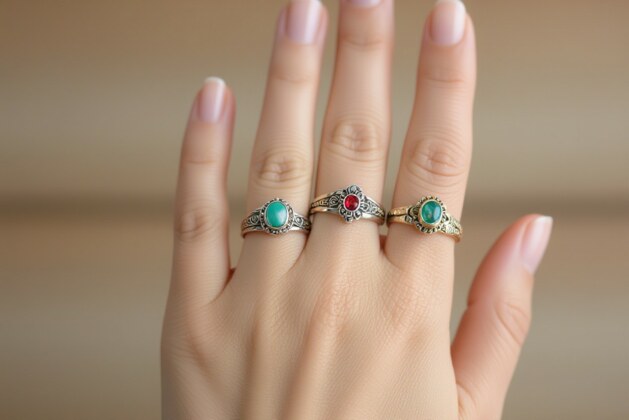
There’s a good chance you’ve casually pointed to your left hand and assumed the “ring finger” is always the one next to your pinky, right? In reality, different cultures use different hands, even different fingers, and that can totally flip your assumptions about what your ring should “mean” on your body. When you start digging into how your fingers are structured and why certain ones got all the romantic attention, you realize there’s a mix of anatomy, tradition, and a bit of myth holding it all together.
The Anatomy of the Hand
Your hand works like a small mechanical miracle, with 27 bones, dozens of joints, and a web of tendons that let you perform everything from typing to rock climbing. Each finger has its own phalanges and joints, but they all rely on shared muscles in your forearm to move in sync. Because tendons run in tight little tunnels, even a tiny injury can mess with multiple fingers at once. That shared system is exactly why the ring finger feels oddly “tied” to the others.
Definition of the Ring Finger
In everyday terms, your ring finger is the fourth finger, sitting snug between the middle finger and the little finger on each hand. On your left hand, it’s the one traditionally used for wedding and engagement rings in many Western cultures. Anatomically, it has three phalanges like most fingers and shares flexor tendons with the middle and little fingers. That shared setup is why it often feels slightly weaker and less independent than its neighbors.
The Role of the Ring Finger in Hand Function
When you grip a coffee mug, swing a bat, or carry grocery bags, your ring finger is quietly doing a lot of heavy lifting. It teams up with your middle and little fingers to generate up to 70 percent of your total grip strength, even though you rarely think about it. Because its tendons are linked, it stabilizes the hand while the index finger handles precision tasks. That combo of power and stability is exactly why losing ring finger function can feel way more limiting than you’d expect.
In everyday use, your ring finger acts like the steady friend holding everything together while the flashier fingers take credit. When you twist a jar lid or hang from a pull-up bar, it’s sharing load-bearing duty with the middle and little fingers, letting you apply force without wrecking your joints. Surgeons actually track ring finger strength in rehab, because if you lose that shared power, your whole grip collapses fast. Damage to the ring finger often cuts your effective grip by a third or more, which suddenly makes basic stuff – like turning a key or carrying a suitcase – feel surprisingly hard.
Cultural Significance of the Ring Finger
When you slide a ring onto a specific finger, you’re not just decorating your hand, you’re stepping into traditions that go back thousands of years. In some places, that ring on your left fourth finger screams engagement, while in others the right hand carries all the weight. If you want to dig deeper into how each finger shifts the message your jewelry sends, check out The Hidden Meaning Of Rings For Each Finger and you’ll never look at your own hands the same way again.
Symbolism of Rings Across Cultures
Across cultures, you’ll see the same finger used to say wildly different things, which is kind of fascinating. In parts of India, stacking rings can signal marital status, wealth, or even regional identity, while in Italian or Latin American families, a pinky ring might quietly flag family heritage or professional pride. Meanwhile, in many Western countries, your left ring finger shouts romance, but in places like Russia or Greece, the right ring finger takes over that job entirely.
Historical Context of the Ring Finger in Marriages
When you trace the story of wedding rings, you quickly realize your ring finger is carrying around a lot of history. Ancient Egyptians believed a “vena amoris” – a vein of love – ran from the fourth finger straight to your heart, so slipping a ring there felt like sealing a promise right into your bloodstream. Romans picked up the habit, then medieval Christian rituals helped lock in the idea that this specific finger signaled legal and spiritual commitment, not just style. Over time, that tiny metal circle basically became a public contract, sitting in plain sight on your hand.
Dig a little deeper into marriage customs and you see how your ring finger turned into a kind of social shorthand. By the 9th century, Christian wedding ceremonies often tapped three fingers while saying “In the name of the Father, Son, and Holy Spirit” then landed the ring on the fourth, which is how that finger started to feel extra special. Later, Victorian couples used gold bands to show not only love but also respectability, so if your left fourth finger was bare, people instantly knew you were single or widowed. That tiny detail on your hand still quietly communicates your status in seconds, without you saying a word.
Variations in Ring Finger Usage
Roughly 70% of the world puts wedding bands on the fourth finger, but which hand you use flips wildly from place to place, and that changes how your ring gets read socially. You might wear a band on your right hand in Serbia or Norway and fit in perfectly, yet the exact same setup could make people in the US assume it’s just a fashion ring. So your “ring finger” isn’t only about anatomy, it’s a kind of cultural code that quietly broadcasts your relationship story.
Regional Differences in Ring Placement
In Germany, Spain, Russia and much of Eastern Europe, you’d usually slide your wedding ring onto the right-hand ring finger, while in the US, UK, France and Italy, it almost always lives on the left-hand ring finger. You might see engagement rings on the left and wedding bands on the right in some Latin American countries, or both rings stacked on one finger in the UK. So when you travel, your “married” finger might suddenly mean something totally different to everyone else.
Influence of Religion and Tradition
In Orthodox Christian communities, you’ll typically see wedding rings on the right-hand ring finger, while many Catholic and Protestant traditions lean hard toward the left hand, tying into that old “vein of love” idea. Jewish couples might place the ring on the right index finger during the ceremony, then move it later, and in Hindu weddings you’ll often spot men wearing their band on the right hand because the left is sometimes viewed as less auspicious. So your ring finger choice can quietly signal not just your relationship, but your spiritual and cultural home base too.
Because religious rituals can be surprisingly specific, you’ll notice tiny details shaping where your ring sits and how you wear it long after the reception ends. For example, in traditional Jewish weddings the groom places a plain gold band on your right index finger so witnesses can clearly see the act, then you might slide it to your left ring finger after, once the formalities are done. In some Hindu communities, toe rings for women carry a similar marital signal, while Christian denominations often insist on a simple, unbroken band to symbolize an unbroken covenant, which is why you see fewer ornate stones in old-school church ceremonies. And if you ever feel weird about not following these patterns exactly, that’s normal, but your ring finger is ultimately a personal choice, even when religion and ancestry speak pretty loudly about where it “should” go.
The Psychological Impact of Wearing a Ring
You don’t just slip on metal, you slip into a mindset, and studies back that up: in a 2013 identity study, people reported feeling more committed and confident when wearing a meaningful ring. Your brain starts treating that tiny circle as a cue for how you should act – more professional with a signet ring, more romantically available with a bare ring finger. Over time, the habit becomes a feedback loop, where the ring shapes your behavior and your behavior deepens the ring’s meaning.
Personal Identity and Symbols
Every time you glance at your hand, you’re basically reading a tiny biography of yourself, and your ring finger is one of the loudest lines. You might use a simple band to signal commitment to a partner, or a chunky ring to lean into a creative, rebellious side. That small, everyday symbol anchors your self-story, so even on chaotic days, you still feel like “you” when that ring is in its usual spot.
Social Perceptions Associated with the Ring Finger
Other people rarely say it out loud, but your ring finger quietly edits how they read you within seconds. A band on your left ring finger signals relationship status and perceived stability, while a bare finger sometimes invites more flirting, more questions, more assumptions. That tiny visual clue can shift how colleagues, dates, even strangers on a train decide to treat you.
In social psychology experiments, participants rated people wearing a ring on the traditional wedding finger as more trustworthy, even when they knew nothing else about them, which tells you how strong that shortcut really is. You also see a bias in professional settings: managers in HR surveys often describe ring-wearers as more “settled” or “reliable”, even if that has nothing to do with actual performance. On the flip side, if you move your ring to another finger or stop wearing it entirely, you might notice questions ramp up, because people use your hands as quick context for how to talk to you, flirt with you, or keep things strictly formal.
Common Questions About the Ring Finger
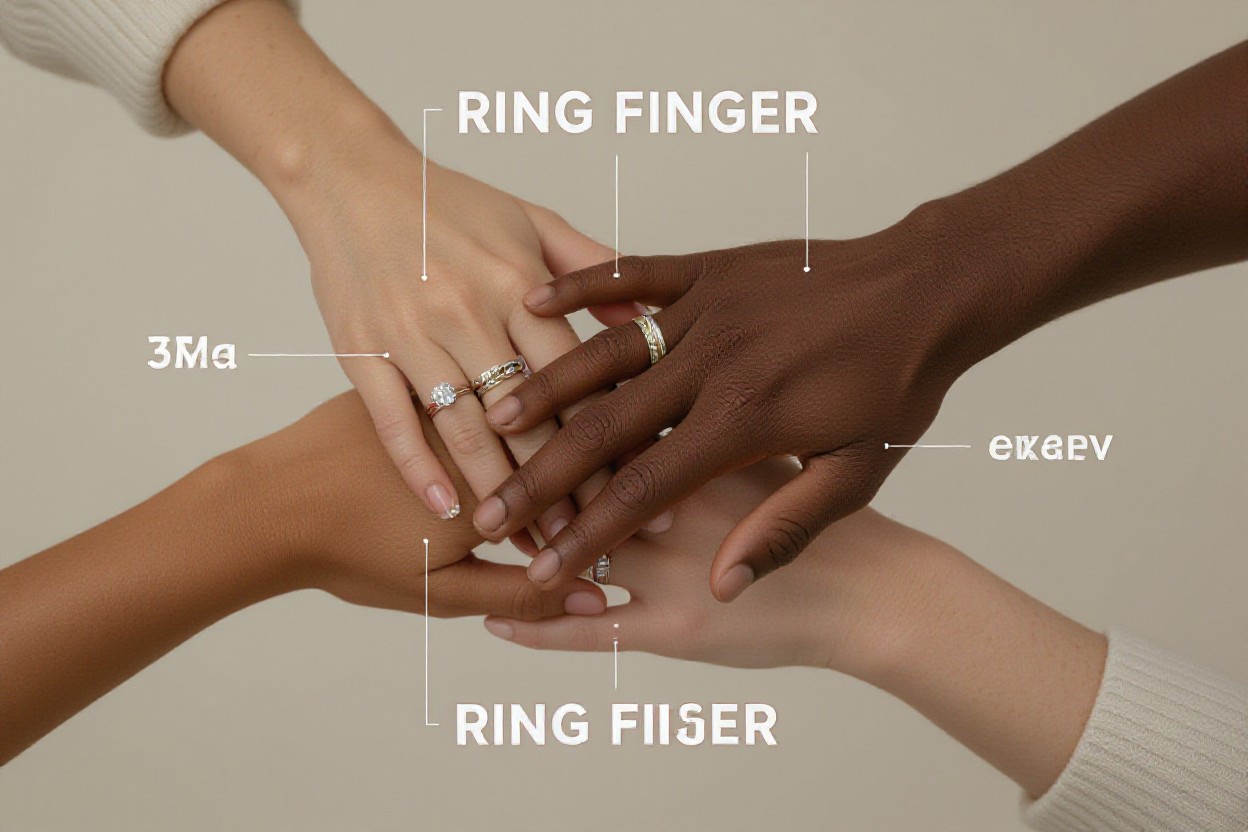
You care about where your ring actually sits, not just for tradition but for comfort, photos, and what it quietly says about your relationship status. That’s why people constantly search things like What Finger Is the Ring Finger? Clear Answer Here and then spiral into questions about left vs right hand, engagement vs wedding bands, and what happens if you hate that finger altogether. Those tiny details end up shaping how you wear your story every single day.
Why is the Ring Finger on the Left Hand?
You get told it goes on the left ring finger, but nobody explains why it actually matters to your daily life. Historically, people believed the left ring finger had a special vein to the heart, and even though science debunked that, the symbolism stuck hard in Western weddings. So when you slide a band onto that finger, you’re not just following a random rule, you’re plugging into hundreds of years of romance, religion, and a bit of superstition too.
Are There Alternatives to the Traditional Ring Finger?
You’re not locked into the left ring finger if it doesn’t fit your style, culture, or job. Plenty of people wear commitment rings on the right hand, stack bands on the middle finger, or move a wedding band to a necklace when working with their hands a lot. The real point is that your ring should fit your life, not the other way around.
Some couples even split the difference: you might wear your engagement ring on the ring finger, then move it to the middle finger after the wedding while the band stays put. Others use the pinky for signet or family rings, which can quietly double as a commitment symbol if you want something subtle. And if you deal with swelling, metal allergies, or you just hate the feeling of rings while lifting weights or working in healthcare, a lot of people go for silicone bands or a small chain necklace instead. In the end, you’re not breaking any rule by shifting fingers – you’re just customizing how you show up in your own story.
Future Trends in Ring Finger Significance
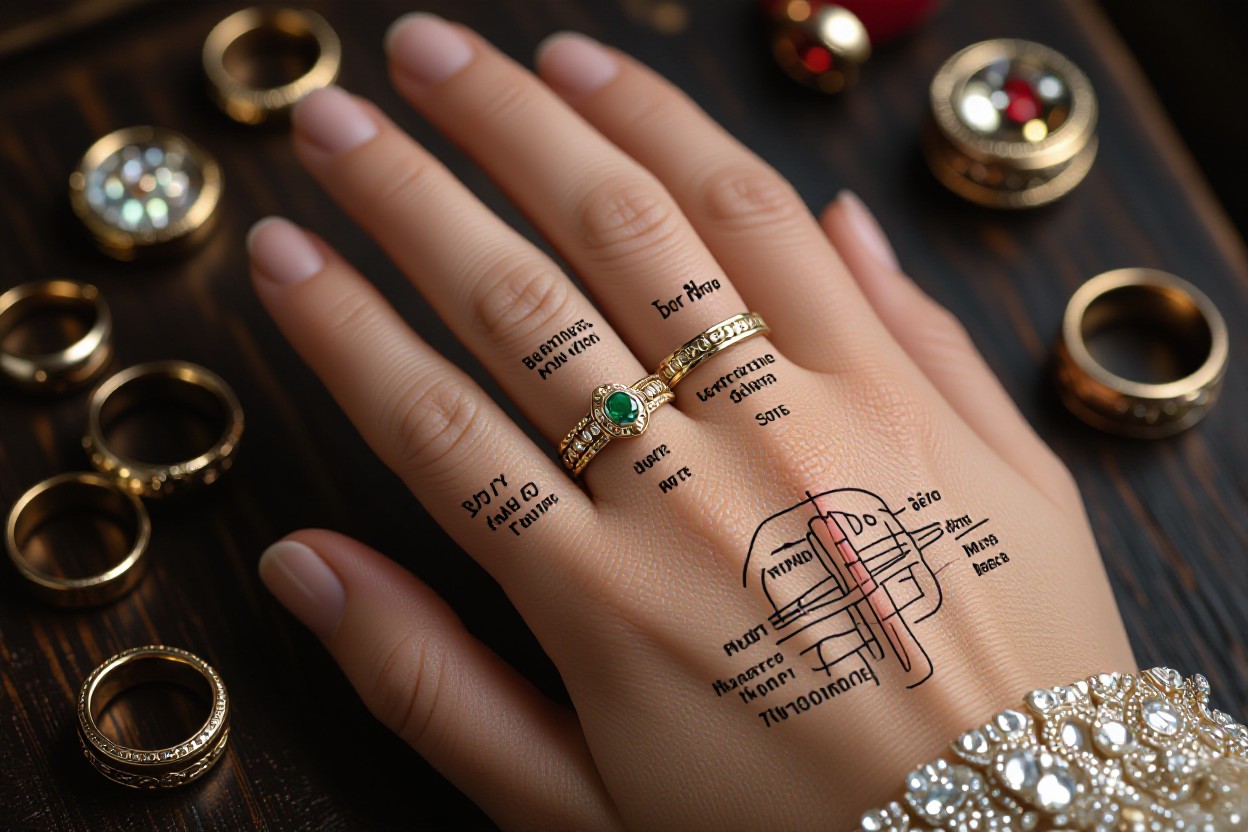
Instead of one “right” finger for all time, you’re moving into a world where ring placement is more like a personal signature, shaped by tech, culture, and what love even means to you. Smart rings that track sleep, rings that open doors, and designs that blend fashion with symbolism are already shifting how you treat your hands. If you want a deeper examine where all this started, Symbolism Ring Finger Meaning: Cultural and Personal … lays out the roots behind the shift.
Contemporary Styles and Trends in Ring Wearing
Instead of sticking to one dainty band, you’re seeing stacking sets, mixed metals, and bold signet rings land on every finger like a mini gallery on your hand. Social media drives a lot of this, because you’ll spot curated ring stacks on TikTok and Instagram long before you see them in a store. Mixing tradition with street-style aesthetics is quickly becoming your new normal, so your “ring finger” might share the spotlight with your index or pinky, depending on the vibe you want.
Evolving Cultural Norms
Rather than one universal rulebook, you’re now living with overlapping mini-rulebooks where culture, identity, and relationship style all tug at your ring choices. Same-sex couples, polycules, and people who just hate labels are placing commitment rings on whichever finger feels right, which quietly chips away at that old left-hand-equals-marriage script you grew up with. As migration increases and about 1 in 5 marriages in countries like the US are now intercultural, you’re seeing blended customs like right-hand engagement rings paired with left-hand wedding bands in the same relationship.
In practice, this means you might wear a promise ring on your middle finger because your job is super hands-on, while your partner keeps a traditional band on their left ring finger, and nobody bats an eye. Younger generations are also reclaiming rings for self-celebration – think “divorce rings”, solo commitment rings, or milestone rings for finishing grad school or buying your first home. Over time, the old idea that one specific finger always screams “married” will probably soften, and your ring story will read more like a personal timeline than a public status update.
Conclusion
Now picture yourself absentmindedly twisting a ring while you talk – you’re not just fidgeting, you’re tapping into a mix of anatomy and centuries of tradition that quietly shape how you wear your jewelry. By knowing which finger is the ring finger on each hand, you can move through weddings, engagements, and everyday style choices without second-guessing what goes where.
So as you slide on your next band, you’re not just decorating your hand – you’re making a tiny, deliberate statement about your culture, your relationships, and your own personal style. And that little bit of awareness? It sticks with you every time your fingers catch the light.
FAQ
Q: Is the ring finger always the fourth finger on the hand?
A: A lot of people assume the ring finger is just “the one next to the pinky” and that’s the end of the story, but it’s a bit more nuanced than that. Anatomically, on both hands, the ring finger is usually counted as the fourth finger if you start from the thumb: thumb (1), index (2), middle (3), ring (4), pinky (5).
In everyday speech though, people sometimes mix up “third finger” and “ring finger”, especially when they start counting from the index. So if you see older diagrams or hear someone say “third finger” for the ring finger, they’re not totally off, they’re just using a different counting convention.
Q: Why do many cultures put wedding rings on the left hand ring finger?
A: A pretty romantic old belief kicked this off: some ancient Romans thought a special “vein of love” ran from the left ring finger directly to the heart. That idea stuck around for centuries and quietly shaped marriage traditions in lots of Western countries.
Today, countries like the United States, Canada, the UK, France, Italy, and others typically use the left ring finger for engagement and wedding rings. The symbolism is simple but kind of sweet – left side of the body, close to the heart, something that feels intimate and personal.
Q: Which cultures use the right hand ring finger for wedding rings?
A: Plenty of people are surprised to find out that in a huge chunk of the world, the “proper” hand for a wedding ring is actually the right one. In places like Germany, Russia, Poland, Greece, much of Eastern Europe, and parts of Latin America, the wedding ring usually lives on the right ring finger.
The reasons vary: in some Christian traditions, the right hand is seen as the hand of oath and honor; in others, it follows older regional customs or religious practices. So if you travel and notice rings on the “other” hand, it doesn’t mean someone is engaged instead of married, it might just be their cultural norm.
Q: Is there any anatomical reason the ring finger is used for rings?
A: From a purely anatomical angle, the ring finger is kind of a nice compromise for everyday wear. It moves less independently than the index and middle fingers, and it’s usually not the main finger used for gripping tools or typing like a maniac all day.
The result is that wearing a ring there tends to be more comfortable and less in the way. Plus, the shape and position of that finger often make rings sit nicely and look balanced on the hand. So yeah, culture did most of the choosing, but anatomy made it a pretty practical pick.
Q: Do engagement rings and wedding rings go on the same ring finger?
A: In a lot of Western traditions, yes, both go on the ring finger of the same hand, usually the left. People often wear the engagement ring alone first, then add the wedding band during the ceremony on that same finger.
Some folks switch the order after the wedding so the band sits closer to the base of the finger, with the engagement ring above it. Others move one ring to the other hand, especially if the rings don’t sit comfortably together. There’s no universal law here, it’s more about what feels good and looks right to you.
Q: What if local tradition clashes with my personal preference for ring finger or hand?
A: This happens all the time, especially in multicultural relationships or when people move to another country. You might come from a “right hand” culture but live in a “left hand” country now, so it can feel like you’re doing it wrong no matter what you choose.
Here’s the comforting part: most people barely notice which hand someone else is wearing a ring on, they just register “ring = taken”. So you’re generally free to follow your background, your partner’s tradition, or your own vibe. If a particular custom matters a lot to family, you can always compromise, like wearing the ring on one hand daily and switching for big family events.
Q: How do you identify the ring finger on each hand without overthinking it?
A: The quick and dirty method is this: make your hand flat, palm facing you, fingers together. Ignore the thumb for a second. The finger right next to the pinky is your ring finger, on both hands.
If you want a more methodical approach: start counting from the thumb as number 1. Thumb is 1, index is 2, middle is 3, ring finger is 4, pinky is 5. That “4” spot is the classic ring finger, whether it’s on your left or your right hand.


Leave a comment