

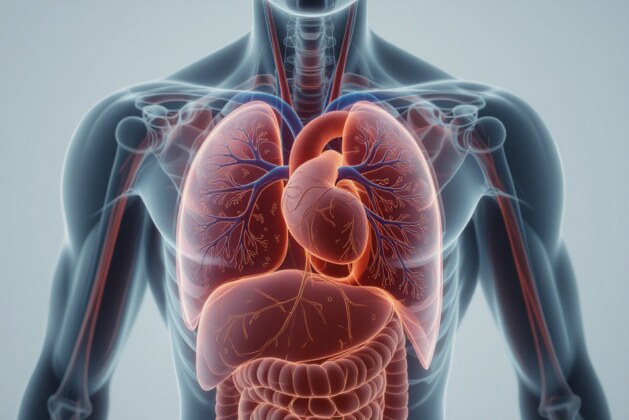
Serendipitous question, right – have you ever pressed your hand to your chest and wondered if your heart is really on the left side like movies always show, or if that’s just clever camera work? In this tutorial-style breakdown, you’re going to map out your own chest and actually find where your heart sits, how it’s tilted, and why it’s not as simple as “left or right”. You’ll see how your ribs, lungs, and vital blood-pumping heart all cram into a pretty tight space.
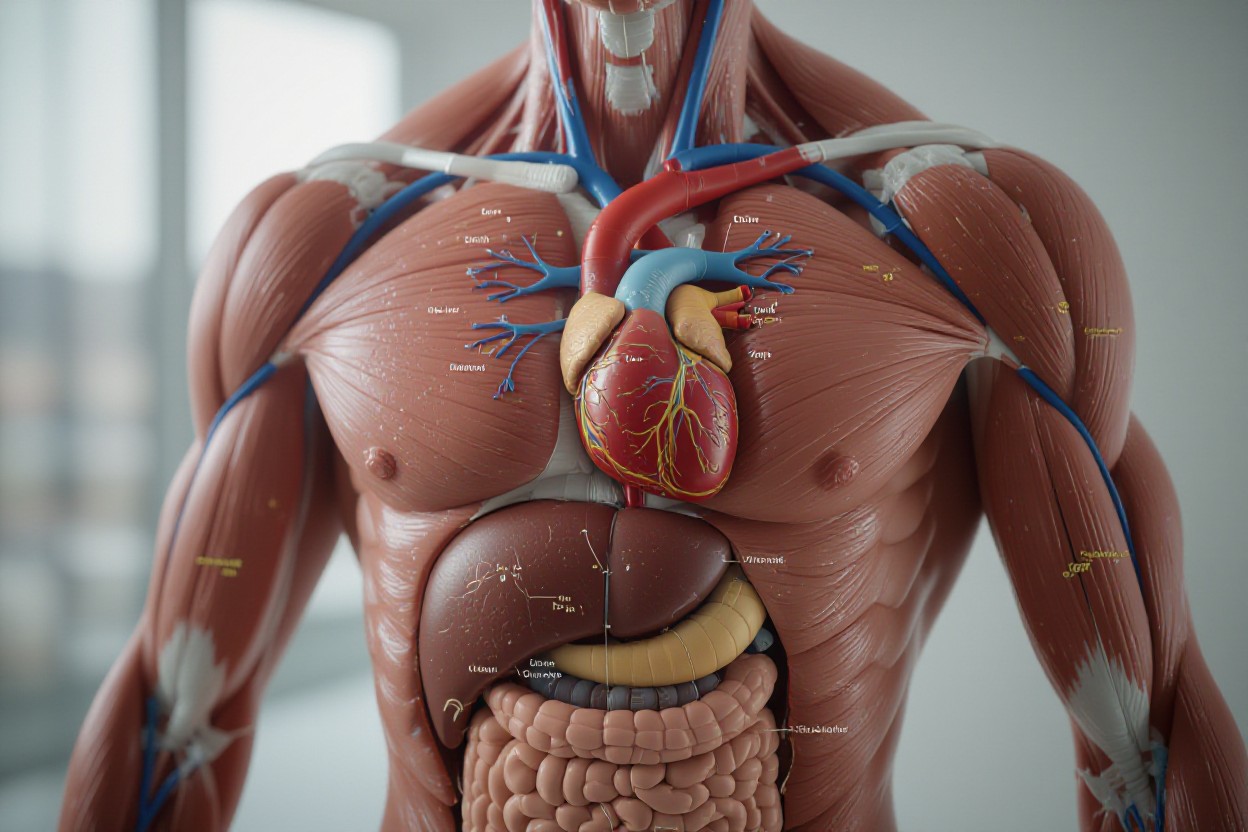
My Take on Heart Placement: Is It Really Left?
Ever notice how you tap the left side of your chest when you say something like “my heart hurts”? You do that because your brain’s been trained to think of your heart as a left-side thing, tied to romance, stress, and those dramatic movie scenes. But anatomically, your heart sits more in the middle, just tilted. That tiny tilt fools your senses and your language, so it feels natural to say it’s on the left, even though that’s not the full story.
Why We Think Our Heart’s on the Left
Have you ever felt your pulse pounding stronger under your left hand during a workout or panic moment? That thumping point, called the *apex beat*, sits slightly left of your breastbone, so your brain tags the whole organ as “left side”. Add in years of cartoons, movies and even emojis showing hearts on the left, and your body map gets pretty biased. So you grow up with this super strong mental image that your heart lives way over on that side, when it’s really more centered.
The Truth About Heart Anatomy
What if you pictured your heart not as a tiny red cartoon, but as a fist-sized pump parked behind your sternum? Anatomically, your heart sits in the mediastinum, about 8-9 cm wide, with roughly two-thirds slightly to the left and one-third to the right. So it’s not dramatically off to that one side at all, it’s just rotated and tilted. And in rare cases like situs inversus, your heart actually points to the right, proving the “always left” idea isn’t as solid as it sounds.
Because the shape is a bit conical, the apex points left and down, which makes things like stethoscope placement and chest compressions way more precise than the vague “over your heart” idea you grow up with. When doctors place ECG leads, they map out your rib spaces carefully, using that central location behind the sternum, not some far-left patch of chest. You might even have had an X-ray where the heart shadow looked like it was hugging the middle of your chest more than your brain expected. That mental recalibration is important, since chest pain on the right can still be heart-related, and trauma to the center of your chest can absolutely affect the heart, even if you don’t feel it on the left first.
The Real Deal About Heart Function: How It Works
If you care about how long you stay active, sharp, and independent, you care about how your heart actually works. This fist-sized pump squeezes about 70 milliliters of blood every beat, adding up to roughly 5 liters per minute at rest, and way more when you’re sprinting for a bus. Four chambers, one job: keep oxygen-rich blood moving to every cell that needs it, from your brain to your pinky toe, with insane reliability.
What’s the Deal with Blood Flow?
Think of your blood flow like a one-way traffic system that really hates U-turns. Blood low on oxygen slips into the right side of your heart, heads to the lungs to get reloaded, then comes back bright red to the left side where it’s pushed out through the aorta at high pressure. Valves snap shut so nothing backtracks, and if one leaks badly, you feel it as fatigue, shortness of breath, or that weird chest heaviness you can’t quite explain.
Understanding the Heart’s Electrical System
Hidden inside your chest, your heart’s running on its own built-in wiring, not magic. A tiny cluster of cells called the SA node fires off about 60-100 times a minute, telling the top chambers to squeeze, then passes the signal to the AV node so the bottom chambers can kick blood out with force. When that timing gets scrambled, you get arrhythmias that can range from mildly annoying flutters to life-threatening rhythms that need shock paddles, meds, or a pacemaker to keep you here.
In practical terms, that means every time you climb stairs without gasping, your electrical system nailed its job. The SA node sets the pace, the AV node briefly delays the signal so the ventricles have time to fill, then specialized fibers (the His-Purkinje network) spread the impulse through the muscle in a split second. Missed beats, rapid-fire signals, or chaotic firing, like in atrial fibrillation, waste your heart’s effort and can let clots form that may trigger a disabling stroke. And on an ECG, doctors can spot tiny timing shifts of just 0.04 seconds and use them to decide if you need simple lifestyle tweaks or serious intervention.
Seriously, What About the Right Side?
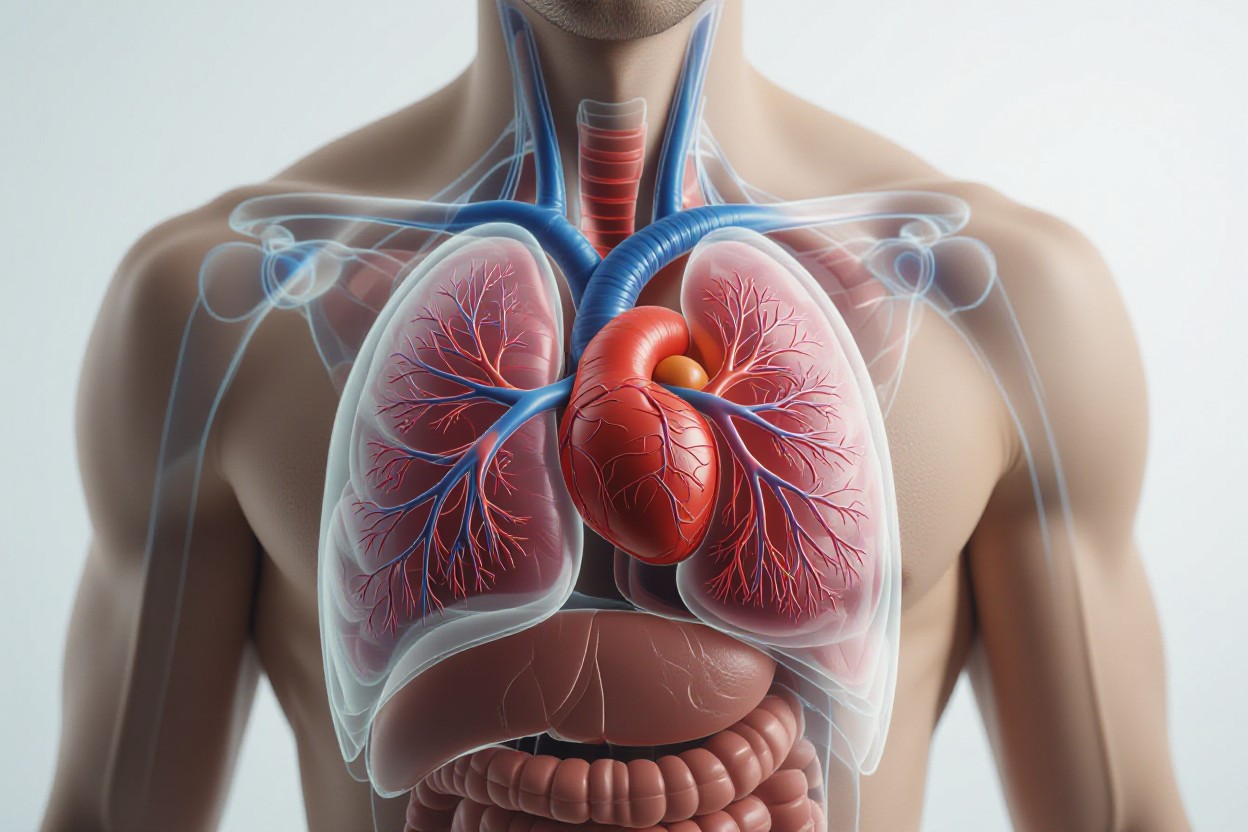
Ever wonder what the “other half” of your heart is actually doing while you focus on the left? Your right side quietly handles all the low-pressure, lung-focused work, scooping up oxygen-poor blood from your body and pushing it straight into your lungs. It sits a bit more to the right and front, hugging your breastbone, and without it, your lungs never get fresh blood to refill. If the right side fails, fluid can back up in your legs, belly, even your liver – so yeah, it absolutely matters.
The Right Side’s Job – Why It Matters
Ever think about what happens to your blood before it gets that fresh hit of oxygen? Your right atrium collects used, low-oxygen blood from your veins, then your right ventricle pumps it into the pulmonary artery, straight to your lungs. That journey runs at a lower pressure than the left side, but it still has to be strong and steady. Chronic lung disease or a clot in the lung (pulmonary embolism) can overload the right side and lead to right-sided heart failure, which you absolutely feel in your legs, ankles, and breathing.
How the Right and Left Work Together
Ever picture your heart as a tag-team instead of a single pump? The right side sends blood to your lungs to pick up oxygen, then the left side grabs that freshly oxygenated blood and blasts it out to the rest of your body at a much higher pressure. Every beat, both sides contract almost in sync, like a perfectly timed relay race. If one side falls behind, the other gets overloaded, and that imbalance can spiral into serious heart failure fast.
On a deeper level, you can think of your right and left sides as two pumps locked in a constant feedback loop – your right ventricle only works well if your left side isn’t jamming blood up in the lungs, and your left side only has something to pump if your right side keeps sending blood forward. So if your left ventricle weakens, pressure rises in the lungs, your right ventricle has to push harder, its muscle thickens, then eventually it starts to fail too. That’s why in real patients with long-term high blood pressure or valve disease, doctors often see enlargement on both sides of the heart on an echo, not just one lonely chamber misbehaving.
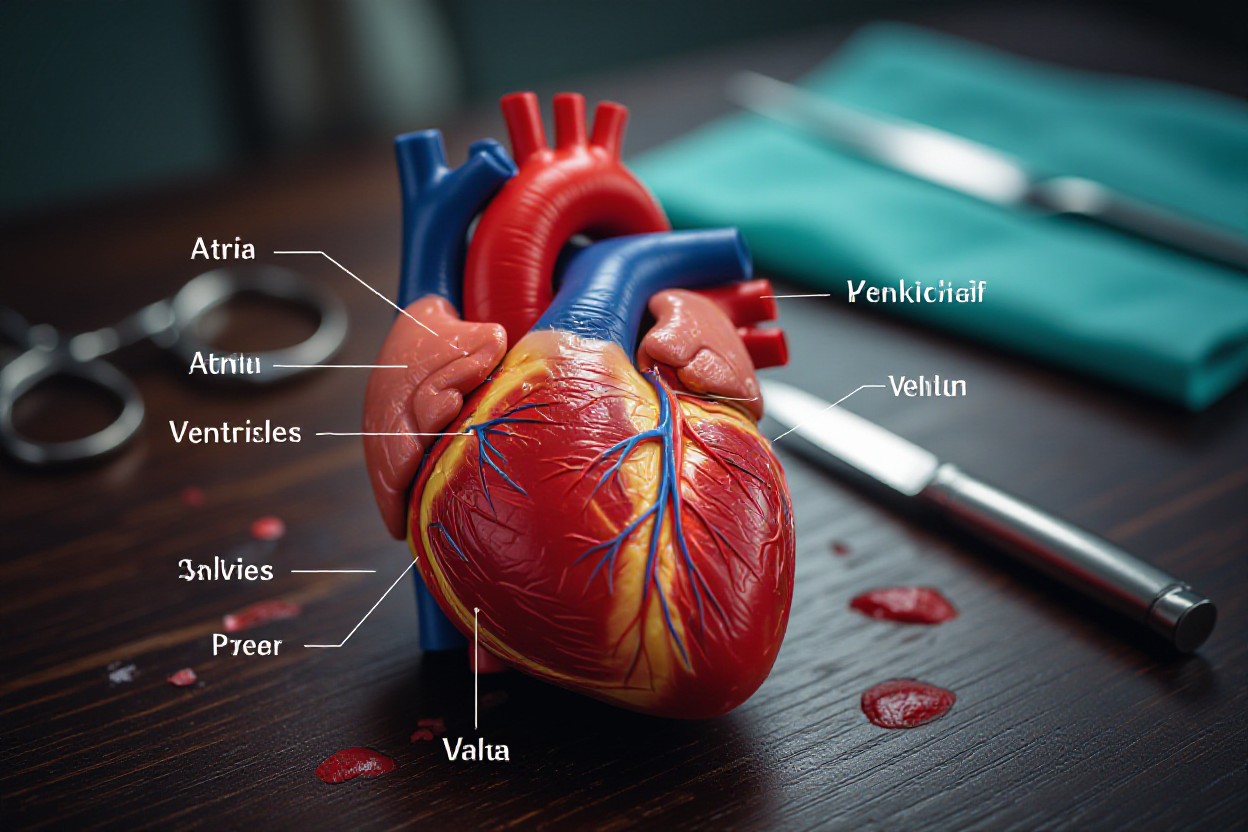
Honestly, Did You Know This? Crazy Heart Facts
You know that moment when your smartwatch freaks out because your heart rate spiked during a horror movie? That tiny surge is just a glimpse of what your heart pulls off daily. Your heart beats about 100,000 times a day and pushes roughly 7,500 liters of blood through about 96,000 kilometers of vessels. That’s like circling the planet more than twice… inside your own body. And wild twist: your heart has its own electrical system, so in a lab it can keep beating even when it’s not in your chest.
Surprising Stuff About Heart Health
Imagine sitting at your desk, sipping coffee, thinking you’re fine, while silent damage is slowly building in your arteries. High blood pressure often has no obvious symptoms, yet it quietly raises your risk of heart disease and stroke. You might think you’re safe if you’re young, but studies show plaque can start forming in arteries in your teens and twenties. The upside is huge though: just 30 minutes of brisk walking a day can cut your heart disease risk by up to 30%.
Fun Facts That’ll Impress Your Friends
Next time you’re at dinner and the convo gets dull, drop this one: your heart creates enough pressure to squirt blood about 9 meters if it left your body. It also has its own rhythm section – the sinoatrial node – that keeps things on beat like a built-in drummer. And get this, your heart syncs a bit with whoever you’re hugging, which is kind of poetic, right?
What really blows people’s minds is how early your heart story starts. By about 3 weeks after conception, that first tiny heartbeat is already flickering away, way before you even look like a human on a scan. Your heart’s also picky about timing – during intense exercise it can jump from 70 beats per minute to 190 or more, yet still coordinates the opening and closing of four valves so precisely that less than a teaspoon of blood gets wasted each beat. In some animal studies, scientists have watched heart cells in a dish slowly start beating in sync, like they’re trying to form a tiny community, and your own cells are basically doing that inside you 24/7.
Conclusion
From above, you can probably see your heart’s not just sitting on the left side like you might’ve always thought, right? It’s tucked slightly left of center in your chest, angled and protected by your ribcage, working nonstop while you go about your day without even thinking about it.
Now that you know where your heart actually sits and how it’s positioned, you can understand your own body a bit better – which is pretty empowering. Next time you feel your chest beat, you’ll know exactly what’s going on inside you.
FAQ
Q: Why do people keep asking which side the heart is on in viral TikTok and health trend videos?
A: A lot of those short clips on social media have folks tapping the far left side of their chest and saying “here’s the heart,” which makes people second-guess what they learned in school. The heart isn’t sitting all the way on the left like a pocket; it’s actually pretty much in the center of your chest, behind the breastbone, with a bigger chunk tilting slightly to the left.
So when you put your hand over your “heart,” you’re usually covering the area where the left side of the heart is closest to the chest wall, which is why you feel the beat more clearly there. The core idea: it’s central, tilted, not just hanging out under your left nipple or something.
Q: Where exactly is my heart located inside my chest – like if I wanted to point to it?
A: Think of your heart as sitting behind your sternum (that flat bone in the middle of your chest) between your lungs, not way off to one side. The base of the heart is a bit higher, near the second rib level, and the tip (the apex) points down and slightly left toward the space between your fourth and fifth ribs.
If you want to point pretty accurately, aim just to the left of the center of your chest, around nipple-level, a little inside the left nipple line. It’s not up near your collarbone, and it’s not low in your belly area either, it’s tucked in that mid-chest zone.
Q: Why do doctors say “left-sided” heart attack if the heart is mostly in the middle?
A: The term “left-sided” isn’t talking about your whole chest, it’s talking about the left side of the heart itself. Your heart has four chambers, and the left ventricle is the one with the big job of pumping blood out to the body, so when that part gets blocked, it often causes pain that people feel on the left side.
Pain signals can be weird. They can spread to the left arm, jaw, or back, which is why people associate heart problems with the left side. So the label is more about which part of the heart muscle is affected, not exactly which side of your ribcage the organ is sitting on.
Q: Can someone’s heart really be on the right side of their chest?
A: Yep, that happens, and it’s an actual medical condition called dextrocardia. In that situation, the heart’s main mass points to the right side instead of the left, like a mirror flip of the usual setup. Sometimes it’s just the heart that is flipped, other times all the internal organs have swapped sides, which is called situs inversus.
Many people with this live normal lives and may not even know until they get an X-ray or ECG. But it can also come with other heart or organ issues, so doctors usually do extra checks when they find it. That right-sided heartbeat really throws off anyone doing a quick stethoscope check if they aren’t expecting it.
Q: Why do I feel my heartbeat more on the left side than in the center?
A: The strongest thump of the heart, called the point of maximal impulse (PMI), comes from the left ventricle hitting the chest wall as it contracts. Because the heart is slightly rotated and offset inside the chest, that thump lands closer to your left side where your ribs and chest wall are thinner.
Also, muscles, fat, and even lung tissue can muffle or shift the sensation. So you might feel it high, low, or more central depending on your body type and position. That’s why some people swear their heart is “way left,” even though the organ itself is still parked mostly in the middle.
Q: How does the heart’s position relate to the lungs, ribs, and diaphragm in basic anatomy?
A: Picture your lungs as two big spongy wings with your heart nestled between them. The left lung is actually a bit smaller because it has to make space for the heart, and it even has a little indentation called the cardiac notch where the heart sits. The heart rests on top of the diaphragm, which is the big muscle that helps you breathe, so every deep breath slightly shifts the way the heart sits and moves.
The ribs and sternum form a protective cage around all of that. So if you think of a cross-section of your chest, you get: ribs on the outside, lungs on each side, heart in the middle leaning left, and diaphragm like a dome underneath supporting the whole thing.
Q: If my heart is central, why do movies show people clutching the far left of their chest when they’re having heart pain?
A: Movies love drama, and grabbing the far left side of the chest just looks more intense and recognizable, even if it’s not textbook accurate. Real heart-related pain is often described as a pressure or tightness behind the breastbone, sometimes spreading to the left side, neck, jaw, or arms, especially the left arm.
So yeah, that classic “hand over the far left chest and fall to the floor” shot is oversimplified. Actual symptoms can be more subtle or spread out, which is why people sometimes mistake heart pain for indigestion, muscle strain, or anxiety at first.


Leave a comment