

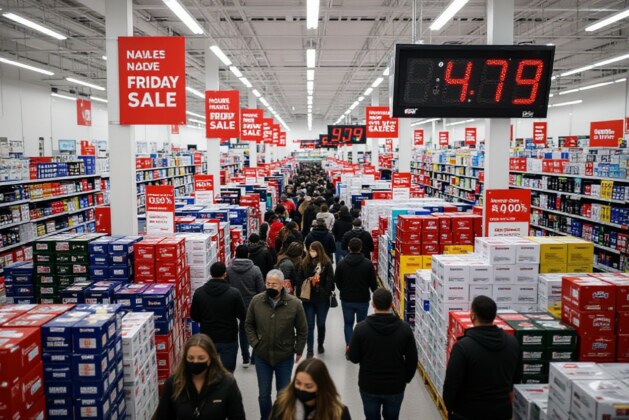
Shopping for Black Friday but not totally sure when it actually hits or how to make it work in your favor? You’re not alone, and yeah, the hype can be a bit wild. In this guide, you’ll get clear on the exact dates, how long the sales really last, and how to protect your wallet while still scoring huge savings. You’ll also learn how to avoid risky deals that aren’t really deals at all.
When the Heck Is Black Friday?
You know that moment in early November when you swear Black Friday ads are already stalking you? That happens because Black Friday itself is always the day after U.S. Thanksgiving, but retailers start teasing it way earlier. So you’re not losing it – the hype really does start weeks in advance, and if you’re not paying attention, the best early deals can quietly vanish before the actual Friday even hits.
The Dates You Can’t Ignore
You’re dealing with a moving target, since Black Friday shifts every year: it falls between November 23 and November 29 depending on the calendar. For example, it landed on November 24 in 2023, hits November 29 in 2024, and will be November 28 in 2025. So if you want doorbusters like TVs or laptops, you’ve got to pin down that exact date early so you can actually plan, not just wing it the week before.
The Big Sales Window: How Long It Lasts
You’re not just shopping one day anymore, you’re in a whole shopping season. Most big-box stores kick off “early Black Friday” deals as soon as late October, then ramp hard the week of Thanksgiving, carry into the weekend, and roll straight into Cyber Monday. That means you’ve typically got a 10 to 14 day window where serious discounts are live, not just that main Friday you see in the ads.
What usually happens is this: you’ll see teaser deals 2 to 4 weeks out, then around the Sunday before Thanksgiving, the real heat starts with price drops on TVs, laptops, small appliances, and gaming gear. Some of the most aggressive offers are “Black Friday pricing” that actually hits on Wednesday or Thursday, so if you only shop on Friday, you might miss the short-lived doorbusters or limited-quantity items. Then the cycle keeps going through the weekend, with online-only drops on Sunday and a fresh wave Monday for tech-heavy Cyber Monday sales. So if you’re smart, you map out that whole arc instead of locking all your hopes on a single chaotic morning.
Black Friday Strategies: What’s the Best Approach?
Most people think you just show up on Black Friday, throw stuff in a cart, and you’ve “won”, but you know better – you need a game plan. Start by setting a hard budget, then rank your must-have deals so you’re not wasting time scrolling random pages at 2 a.m. Use price tracking tools, stack coupon codes with cashback, and decide in advance which stores you’ll hit in person versus online. Any extra time you spend planning now saves you from impulse buys and post-sale regret later.
Types of Sales: What to Look For
A lot of shoppers assume every discount tag is a win, but Black Friday deals are not all created equal, not even close. You’ve got limited-quantity doorbusters, solid but less intense percentage-off sales, sneaky bundle offers, and sometimes fake markups that make discounts look bigger than they really are. Any time you see a “50% off” sign, you should compare the price history, check product reviews, and see if gift card promos or loyalty rewards make the deal actually worth it.
| Type of Sale | What You Should Watch |
| Doorbusters | Ultra-low prices but tiny quantities, so you need to be ready the minute the sale goes live or you’ll miss the best stuff. |
| Percentage-off deals | Flat 20%-70% discounts are great if the base price is real, so you should check prior weeks to avoid fake markups. |
| Bundle offers | Console-plus-game or laptop-plus-accessories can be strong value, but only if every item is something you’ll actually use. |
| Gift card promos | Buy-one-get-a-gift-card deals stretch your budget, especially at stores you already shop at every month. |
| Price match & coupons | Some retailers let you stack coupons or price match competitors, which can quietly turn a good discount into a killer one. |
- doorbusters
- percentage-off deals
- bundle offers
- gift card promos
- price match
Any time you’re faced with multiple sale types, you should focus on long-term value, not just the biggest-looking percentage.
Pros and Cons: Is It Really Worth It?
People love to say Black Friday is either the holy grail of savings or a total scam, but the reality for you usually sits somewhere in the messy middle. You can slash 30%-60% off big-ticket items like TVs, laptops, and appliances, yet you might lose sleep, patience, and your budget if you go in without limits. Any smart approach balances the high of snagging a bargain with the burnout, delays, and returns that often follow.
| Pros | Cons |
| Huge savings on big-ticket items | Impulse spending that blows your budget |
| Great time to upgrade tech that rarely drops below 30% off | Limited stock on top deals, so you might miss what you wanted most |
| Early holiday shopping so you avoid mid-December chaos | Shipping delays and backorders can push gifts into late December |
| Stackable rewards, cashback, and points that boost long-term value | Returns can be messy with restocking fees or shortened windows |
| Perfect moment to lock in needed purchases at lower prices | Overhyped deals where “sale” price equals regular price from October |
| Chance to test new brands at discount before fully committing | Crowds, stress, and decision fatigue that wear you down fast |
| Online-only promos that let you skip the in-store grind completely | Doorbuster focus can distract you from better everyday-value options |
| Bundles and gift card offers that stretch your holiday budget | Some deals get beaten by Cyber Monday or December clearance sales |
You’ve probably seen those viral posts about someone scoring a TV for half off and thought, “ok, so is that actually normal or just a one-off fluke?” In reality, your experience hinges on how intentional you are: shoppers who research prices for a week or two, set firm limits, and track only a small list of targets tend to walk away with genuine savings and a lot less regret. Meanwhile, if you chase every flashy banner, add random “maybe” items to your cart, and ignore your budget, the cons on that table start piling up really fast. Any time you weigh if Black Friday is worth it, you should ask whether the time, stress, and possible overspending line up with clear wins on the specific items you truly need right now.

My Top Tips for Navigating the Madness
Biggest mistake you can make on Black Friday is winging it with no plan and no price receipts in your head. Use a tight list, compare historical prices, and stack store rewards with credit card cashback so you’re double-dipping on every cart. Check out Black Friday Will Be Confusing (Again). Here Are Our Tips and then filter your buys to only what drops at least 20-30% below the 3-month average. After you cap your total budget, walk away the second you hit it, even if that lightning deal looks shiny.
- Stick to a tight shopping list and avoid wandering the sale pages.
- Track price history with tools so fake markdowns don’t trick you.
- Stack promo codes, store cash, and cashback for real savings.
- Prioritize doorbusters with limited stock and set alerts on them.
Step-by-Step Guide to Scoring Deals
You get the best results when you treat Black Friday like a mini project, not a random scroll-fest at midnight. Build a ranked list of your top 5 targets, check their price history a week ahead, and pre-load your payment and shipping details on the apps you actually use. After that, follow a simple sequence so you’re not hopping between 12 tabs at 4 a.m. wondering what you just bought.
| Step | What You Should Do |
|---|---|
| 1. Pre-game research | Identify 5-10 items, then use price trackers to verify real discounts. |
| 2. Rank by priority | Sort by must-have, potential sellout risk, and total savings. |
| 3. Prep accounts | Save payment methods, addresses, and logins the day before. |
| 4. Time your buys | Hit early doorbusters first, then scheduled drops and price matches. |
| 5. Audit your cart | Delete impulse adds, confirm final total, and screenshot receipts. |
Key Factors That Can Make or Break Your Shopping Experience
Little details you ignore at 1 a.m. are exactly what blow up your savings later. Things like weak return policies, shady restocking fees, or slow shipping can eat the value of that “70% off” within seconds. After you layer in tax, shipping, and rewards, the best deal is usually the one that fits your actual life, not just the lowest sticker price.
- Double-check return windows and whether you pay for return shipping.
- Watch for restocking fees on electronics and big-ticket items.
- Factor in shipping times if you need gifts before specific dates.
- Compare warranty coverage and support, not just the sale price.
So many shoppers focus only on the flashy percentage off and forget that a 40% deal with terrible returns or no warranty can cost more than a 15% discount from a retailer that treats you decently. You also want to pay attention to inventory levels, limited-time promo windows, and whether stores quietly exclude popular models from their best promos. Some of the savviest buyers I know track price-matching policies and pounce when a competitor drops lower, then get the difference refunded without placing a new order. Knowing which stores actually stand behind their policies is what turns you from a one-day shopper into someone who wins every sale season.
- Prioritize stores with solid customer service and responsive support.
- Check if price matching applies on Black Friday or is temporarily paused.
- Weigh loyalty rewards that you can use on December purchases.
- Track realistic delivery estimates so gifts don’t arrive in January.

Why I Think Planning Ahead is a Game Changer
Most people think Black Friday is about sprinting through deals, but the real magic happens weeks before you ever click “checkout”. When you plan ahead, you stop panic-buying and start stacking discounts, cashback and price guarantees like a pro. You already know which stores drop teaser ads early, you track prices, and you spot fake markdowns fast. That prep lets you skip the chaos, protect your budget, and still snag the big-ticket stuff you actually want.
Creating a Budget and List
Weirdly enough, the less money you want to waste, the more specific your list has to be. Instead of “gifts”, you write “4 toys under $25 each”, “TV under $500”, “laptop for school”. Set a hard ceiling, like $400 total for gifts, then assign mini-budgets to each category. That way when a flashy sale pops up, you can ask: is this on my list or just shiny distraction bait?
Timing Your Purchases Right
Some of your best “Black Friday” deals actually hit on Thanksgiving, Cyber Monday, or random early-bird drops the week before. TVs and laptops, for example, often hit their lowest prices between Thursday and Cyber Monday, while small kitchen gadgets get better bundles on actual Black Friday. When you track a few items for 2-3 weeks with tools like price history charts, you start to see patterns, and suddenly you’re buying on the right day instead of just the loudest one.
What usually surprises people is that you don’t have to buy everything on that single Friday – you treat it like a mini season. Big electronics might be cheapest on Thanksgiving night, while some retailers roll out their real gaming or toy promos on Cyber Monday, and then quietly add price adjustments if you bought a bit early. So you watch for things like “Black Friday price guarantee” or 7-14 day price protection, you save screenshots of advertised prices, and you time your checkout so you’re inside those windows. That way if the TV you grabbed for $549 drops to $499 two days later, you can often get $50 back without returning a thing, which is the kind of quiet win most shoppers never even realize they left on the table.
The Real Deal About Online vs In-Store Shopping
You’re scrolling through flash deals at midnight while people are literally camping outside Best Buy, and both groups might be getting solid wins. Online retailers quietly drop app-only prices, stackable promo codes, and 2 a.m. price glitches, while in-store you’ll see limited-quantity doorbusters like $99 TVs that never hit the website. The real move is mixing both: you lock in high-demand items online, then hit the store for stuff where you actually care about seeing, touching, and testing before handing over your card.
Perks of Shopping from the Sofa
You’re on the couch, wearing sweatpants, snagging a laptop deal that 500 people are fighting over in a parking lot, and you don’t even have to find a cart. Online you can compare prices across four sites in 30 seconds, stack cashback extensions and loyalty rewards, and skip those impulse grabs by the register. A lot of retailers even launch their best Black Friday prices on Thanksgiving night or earlier, so you quietly check out before the doors ever open.
When You Should Brave the Crowds
You grab coffee at 4 a.m., throw on a hoodie, and you’re standing outside Target with a short list, not just vibes. In-store is where you’ll see doorbusters that never go online, like 70% off small appliances or consoles bundled with extra controllers that vanish in minutes. It’s also your shot at price-matching with screenshots, checking TV panels side by side, and grabbing clearance stuff the website says is “sold out” but is actually sitting on a back endcap.
Some trips are 100% worth lacing up your shoes for. Big-ticket electronics like TVs, soundbars, gaming PCs, or that $400 Dyson marked down to $249 are way easier to judge in person, so you can spot weak viewing angles or cheap-feeling build quality before you commit. You can also work the system a bit: a lot of stores quietly honor online-only prices at the register if you show the app, then you stack an in-store coupon or gift card promo on top. And if inventory is tight, being physically there when doors open gives you a real shot at those “first 50 customers only” offers that never last more than 10-15 minutes online.

How to Spot Fake Deals: Don’t Get Played!
It’s wild how many “75% OFF!” Black Friday deals are just regular prices in disguise, so you’ve got to treat every banner like it might be lying. Track prices with tools like CamelCamelCamel or Keepa for at least 30 days so you know if that $499 TV was actually $499 all month. Pay attention to weirdly specific discounts (like 63% off) and forced bundles that jack up the final cost. And when a timer’s constantly “about to expire” yet magically resets, that’s your cue to back away.
Red Flags to Watch For
Biggest red flag? A deal that feels too perfect and gives you zero time to think, because pressure is a scammer’s favorite weapon. Be suspicious of checkout pages that add mystery “protection” fees, sites that only accept wire transfers or crypto, and product pages with 5-star reviews but no real photos or specifics. If the brand is unknown, has a sketchy URL, or copies another store’s layout, you’re basically holding a neon sign that says “please steal my data.”
Honest Reviews: Trust Your Sources
You’re doing yourself a favor when you treat reviews like detective clues, not gospel, and only lean on sources that show both pros and cons. Check detailed 3 and 4-star reviews, verified purchase tags, and user photos showing the product in real homes. Cross-check ratings on at least two platforms, like Amazon plus Reddit or Wirecutter. If every review sounds identical, super generic, or weirdly polished, that’s your sign to tap out.
What really saves you from garbage deals is building a short list of reviewers and sites you actually vibe with and then sticking to them. You might rely on Wirecutter for appliances, a specific YouTuber for laptops, and Reddit threads for gaming monitors, because each of those crowds spots different issues and they’re not afraid to call out junk. Scan for recurring complaints about stuff like dead pixels, cheap zippers, or batteries dying in 3 months – patterns are way more honest than a single rant. And when you see a product with 4.6 stars but hundreds of mid-tier reviews that say “great, but…”, that’s often way more trustworthy than a sketchy wall of perfect 5-star hype.
To wrap up
With this in mind, the wild thing about Black Friday is that the date actually shifts every year, yet your strategy really doesn’t have to. Once you lock in that it’s always the day after Thanksgiving, you can work backward, map out your must-buy list, and stop letting last-minute panic drive your cart.
So if you use the dates, early leaks, and your own budget as guardrails, you’ll spot real deals faster, skip a ton of noise, and walk away with what you actually wanted instead of what retailers hoped you’d grab on impulse.
FAQ
Q: When exactly is Black Friday and does the date change every year?
A: Black Friday always falls on the Friday right after Thanksgiving in the United States, so the specific calendar date changes every year. Thanksgiving is the fourth Thursday in November, which means Black Friday lands anywhere between November 23 and November 29 depending on how the month lines up.
What matters for you as a shopper is that retailers plan their biggest promos around that long weekend, not just the single day. So if you know when US Thanksgiving is, you basically know when Black Friday hits, even if the exact number on the calendar shifts around a bit.
Q: How long do Black Friday sales actually last – is it just one day?
A: Black Friday stopped being a one-day thing a while ago. Most big retailers now roll out “Black Friday” deals starting the Monday of that week or even earlier, then keep them running through the weekend and into Cyber Monday.
Some stores even kick off “early Black Friday” promos right after Halloween. That means real-life shopping ends up being a 3-to-10-day event where different deals drop at different times, so you don’t have to panic-buy everything at 6 a.m. on Friday unless you’re chasing a specific doorbuster.
Q: When should I start planning my Black Friday shopping to actually save money?
A: Smart planning starts a few weeks before the big weekend, not the night before. You want a rough list of what you actually need or want, a realistic budget, and a sense of normal prices so you can tell if a discount is real or just marketing fluff.
Because retailers tease their ads early, you can compare flyers, sign up for store emails, and bookmark the products you’re eyeing. If you track prices through early November, you’ll spot which “sale” prices are just the regular price with a big red label and which ones are legit bargains worth jumping on.
Q: Is it better to shop Black Friday in-store or online?
A: Both can work, but they feel very different. In-store shopping is usually better for limited-quantity doorbusters, super cheap TVs, or items where you want to walk out with it that day, but it comes with lines, crowds, and stuff selling out fast.
Online is way more chill: you can compare prices across multiple stores in separate tabs, avoid parking chaos, and often get the same or even better deals, especially on electronics and small appliances. The sweet spot for a lot of people is mixing both: grab a few must-have in-store items early, then finish the rest online in pajamas later.
Q: How do I know if a Black Friday deal is actually worth it or just hype?
A: One of the best tricks is to check price history on tools like price comparison sites, browser extensions, or even just past sales on the same product. If the “Black Friday price” has already appeared earlier in the year, it might not be as special as the ad makes it sound.
Also pay attention to model numbers, especially for TVs and laptops. Some products are made specifically for Black Friday with slightly worse specs that look similar at first glance, so reading the fine print on storage, resolution, and refresh rate helps you avoid getting stuck with a bargain that isn’t really what you wanted.
Q: What are the best times of day to shop on Black Friday?
A: For in-store, the biggest doorbusters are usually early in the morning, sometimes even starting late on Thanksgiving night if your local laws and stores allow it. If you’re chasing those “while supplies last” deals, you often have to line up before the store opens, which is not super fun but can pay off if you’ve done your homework.
For online deals, hot items can sell out within minutes of going live, often just after midnight or at specific announced times during the day. Setting alerts, logging in to your account beforehand, and having payment and shipping info saved can make the difference between scoring that deal and watching the “out of stock” message pop up instead.
Q: What are some simple tips to avoid overspending or getting stressed on Black Friday?
A: A clear budget is your best friend here. Set a total amount you’re willing to spend, break it down by category (gifts, home, personal treats), and keep a running tally so things don’t spiral when you see “70% off” signs everywhere.
It also helps a ton to make a short priority list of must-buy items and tackle those first, then decide if the extra “nice to have” stuff still fits your budget. Take breaks, drink water, eat something real, and remember you’ll see more sales in December and even January, so you don’t need to buy every single thing just because there’s a Black Friday tag on it.


Leave a comment