

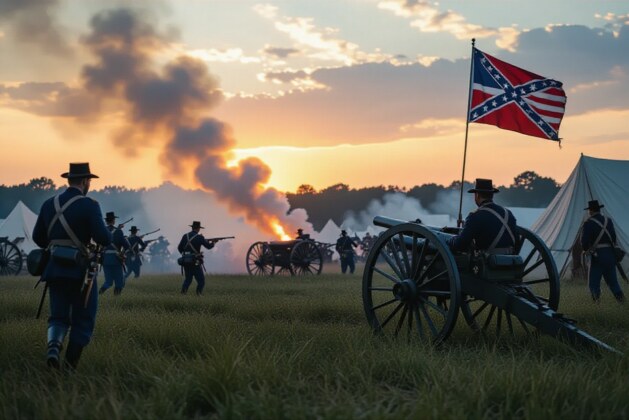
What’s the Big Deal About the Civil War?
Roughly 750,000 Americans died in the Civil War, which means you’re looking at a conflict that reshaped nearly every part of life in the United States. You get the end of legal slavery in 1865, massive shifts in federal power, and a brand-new vision of citizenship that still affects your rights today. So when you trace voting laws, racial tensions, or even current debates about states’ rights, you’re basically walking in the Civil War’s shadow without always noticing it.
Why the Civil War Matters Today
When you see ongoing fights over voting access, policing, or Confederate monuments, you’re bumping right into unfinished business from the 1860s. Your school curriculum, your local flag, even which holidays get celebrated are all shaped by how people chose to interpret that war. So if you want to really get why inequality sticks around or why some regions feel so dug in politically, you’ve got to follow those threads straight back to the battlefields and the messy peace that followed.
A Quick Overview of Key Players
More than 3 million soldiers wore Union or Confederate uniforms, but a handful of names show up over and over in your textbooks. You’ve got Abraham Lincoln in Washington, Jefferson Davis in Richmond, and generals like Ulysses S. Grant, Robert E. Lee, William Tecumseh Sherman, and Stonewall Jackson shaping what actually happened on the ground. Add in freed and enslaved Black Americans, from Harriet Tubman to the United States Colored Troops, and you start to see this isn’t just a story of famous white politicians in fancy portraits.
On the leadership side, you’ve got Lincoln juggling military disasters, cabinet infighting, and re-election in the middle of a war, while drafting the Emancipation Proclamation that turned 186,000 Black soldiers into a real fighting force for the Union. Across the lines, Jefferson Davis tried to hold a fragile Confederacy together as states guarded their own power and resources, which made long-term strategy a nightmare. Generals like Grant and Sherman eventually leaned into hard-hitting campaigns like Vicksburg and the March to the Sea, while Lee’s bold moves at battles like Chancellorsville and Gettysburg show you how much one commander’s choices could swing the fate of tens of thousands of lives in a single week.
When Did It All Go Down?
You care about dates here because they anchor everything else you’ve read – battles, politics, daily life. The Civil War officially ran from 1861 to 1865, but in your head you can frame it as four brutal, overlapping storylines: secession in 1860-61, early chaos, massive total war in 1863-64, and collapse in 1865. Once you tag each event to a year, you start seeing patterns: when strategies shifted, when morale cracked, when casualties spiked into the hundreds of thousands.
The Start Date: Marking the Beginning
You can’t really track the war without nailing down when it actually kicks off, so your mental timeline should pin April 12, 1861 right at the start. That’s when Confederate guns opened fire on Fort Sumter in Charleston Harbor after months of rising tension. By the time the fort surrendered on April 13, Lincoln was already calling for 75,000 volunteers, and in just days Virginia and three other states joined the Confederacy, turning a political crisis into a shooting war.
Wrapping Up: The End of the War
You get the real shape of the conflict when you see how it winds down in 1865, not in one clean moment but in a fast chain of collapses. Lee surrendered the Army of Northern Virginia at Appomattox Court House on April 9, 1865, which you can treat as the symbolic finish line, even though fighting dragged on. By late May, major Confederate forces had surrendered, Jefferson Davis was captured, and the last significant Confederate unit in Texas finally gave up on June 2, 1865.
What really jumps out when you zoom in on the end is how quick everything unravels once the Confederate military backbone snaps. In early 1865 you’ve got Sherman cutting across the Carolinas, Grant hammering at Petersburg, and Southern supply lines basically falling apart, so by April the Confederacy is living on borrowed time. Lee’s surrender on April 9 is the headline moment you see in textbooks, but you should also track April 26 (Johnston surrendering to Sherman), May 10 (Davis captured in Georgia), and June 2 (Kirby Smith surrendering west of the Mississippi) if you want a clear mental map.
The war doesn’t just stop with a handshake at Appomattox – it bleeds out through scattered skirmishes, guerrilla pockets, and confused soldiers trying to figure out if they’re actually done fighting.
That messy fade-out shapes what comes next.
Major Events You Can’t Ignore
Instead of treating the war like one long blur, you can track it through a handful of flashpoint moments that changed everything for people living through it. From the first artillery blasts over Charleston Harbor to surrender papers at Appomattox, specific days in 1861-1865 shaped how you understand power, freedom, and survival. If you want to see how these dates unfold visually, this Timeline of the Civil War | Articles and Essays maps out key events with original photos that really hit you in the gut.
The First Shots Fired – Fort Sumter
Nothing about April 12, 1861 felt abstract to the soldiers huddled inside Fort Sumter as Confederate guns opened fire across Charleston Harbor. You get a 34-hour bombardment, no Union deaths from combat, but a political explosion that triggers Lincoln’s call for 75,000 volunteers and pushes four more states into the Confederacy. In a weird twist, this relatively small clash becomes the point of no return for both sides.
Turning Points: Gettysburg and Antietam
On paper, Antietam in 1862 and Gettysburg in 1863 are just two battles, but for you trying to follow the war’s rhythm, they’re like massive speed bumps. Antietam leaves around 23,000 casualties in a single day, giving Lincoln the leverage to issue the Emancipation Proclamation, while Gettysburg racks up roughly 51,000 casualties over three days and halts Lee’s northern push for good. Together, they slam the brakes on Confederate momentum and flip the political script in Washington.
When you zoom in a bit, Antietam reads almost like a grim checklist: Miller Cornfield, Sunken Road (later called Bloody Lane), Burnside Bridge – each spot chewing up entire regiments in minutes. Lee’s army survives, but you see how that tactical stalemate hands Lincoln a political opening, turning a war for Union into a war linked to ending slavery in rebel territory, which also scares off European recognition of the Confederacy. Then Gettysburg hits the following summer, with Union troops holding Cemetery Ridge while Pickett’s Charge sends some 12,000 Confederates across open ground into withering cannon and rifle fire, and by the time it’s over, you’re looking at a battered Army of Northern Virginia limping back south, never again strong enough to truly threaten major Northern cities.
The Final Chapters: Sherman’s March and Appomattox
By late 1864 and early 1865, you’re not just watching armies clash, you’re watching Confederate capacity to fight slowly collapse. Sherman’s March to the Sea cuts a fiery path from Atlanta to Savannah, tearing up railroads and supplies, while Appomattox Court House in April 1865 gives you that quiet, powerful scene of Lee surrendering to Grant in a simple Virginia home. In those moments, the Confederate war effort effectively dies, even though scattered fighting drags on a little longer.
Once Sherman leaves Atlanta in November 1864 with around 60,000 troops, your mental map shifts from tidy battle lines to a wide swath of destroyed tracks, seized food, and burned infrastructure designed to break the South’s will to keep going. Civilians feel the war at their front doors, not just at distant fronts. Then at Appomattox, on April 9, 1865, you see the opposite mood: Grant offering relatively generous terms so Confederate soldiers can go home with their horses, Union troops saluting their former enemies, and an unstated message that the shooting part of this conflict is done – now you’ve got the much messier fight over what reunion and freedom will actually look like.
Important Dates to Remember
You probably have a handful of dates that instantly pop into your head – 1776, 9/11, things like that – but the Civil War has its own set of anchor moments you really want in your mental timeline. You’ve got the opening shots at Fort Sumter in April 1861, Lincoln’s Emancipation Proclamation in 1863, and then Appomattox in April 1865 when Lee surrendered. When you pin those on your mental map, the rest of the war suddenly feels way easier to track.
A Timeline of Major Events
Imagine you’re scrolling through your phone and each swipe is a year: 1861, you hit Fort Sumter and the war kicks off; by 1862, you’re at Antietam, still the bloodiest single day in American military history. Slide into 1863 and you hit Gettysburg in July, then Lincoln’s famous address that November. By 1864, Sherman’s March slices through Georgia, and in early 1865, you land on Richmond’s fall, Lee’s surrender at Appomattox, and Lincoln’s assassination just days later – all packed into a brutal final stretch.
Key Figures and Their Contributions
You’ve probably heard a dozen names thrown around – Lincoln, Grant, Lee – but each of them shaped the war in very specific, very different ways. Lincoln drove the political vision and issued the Emancipation Proclamation in 1863, which flipped the war into a fight over slavery. On the battlefield, Grant’s relentless campaigns in 1864-65 and Sherman’s hard-hitting march through Georgia broke the Confederacy’s backbone, while Lee’s early tactical brilliance kept the South in the fight far longer than its resources really allowed.
What really hits you, once you dig in, is how these people’s choices collide. You’ve got Lincoln, quietly reading military texts at night so he can push his generals harder, then Grant, who’s hammered in the West at places like Vicksburg in 1863 before taking overall Union command. At the same time, Lee is pulling off wild moves like his 1862 Maryland Campaign and 1863 Chancellorsville victory, even while the South is bleeding manpower it can’t replace.
Then there’s Sherman, whose 1864 Atlanta Campaign and infamous March to the Sea slice straight into the Confederacy’s ability to fight, targeting rail lines, factories, and supplies so you’re not just counting battlefield wins, you’re watching an entire war machine shut down. And you can’t skip people like Frederick Douglass, who lobbied Lincoln for Black enlistment, or Clara Barton, who later founded the American Red Cross after tending wounded soldiers in some of the worst conditions you can imagine. When you stack their stories together, you see how political leadership, military strategy, and grassroots action all tied into the same outcome, each one nudging the war in ways you can literally trace date by date.
My Take on the War’s Legacy
Roughly 620,000 to 750,000 people died in the Civil War, and you still feel the aftershocks every time you talk about federal vs state power, voting rights, or race. When you scroll a modern American Civil War | Timeline, you’re not just browsing old battles, you’re tracing why your government looks the way it does, why the map of red and blue states breaks the way it does, and why debates over monuments or the Confederate flag still get so heated today.
How the Civil War Shaped Modern America
By 1870, you had 4 million formerly enslaved people legally free and the 13th, 14th, and 15th Amendments hardwired into the Constitution, which rewired how you think about citizenship and rights. You live with war legacies every day in the income tax that started in wartime, in a bigger federal government, in a modern military system, and even in how you argue about federal power vs “states’ rights” on issues like voting access or school policy.
Lessons Learned from the Conflict
Roughly 1 in 4 Civil War soldiers never made it home, and if you zoom in on that, you get a pretty blunt lesson about what happens when political compromise collapses and people decide violence is the only path left. You see how dehumanizing rhetoric about race made it easier to defend slavery, how bad information and propaganda fueled secession fever, and how unfinished Reconstruction basically set the stage for Jim Crow, so you learn that winning a war is not the same thing as winning a just peace.
What really hits you when you dig into this conflict is how fast “it can’t happen here” turned into neighbors fighting each other with rifles, and that should keep you on your toes any time public debate gets toxic. You learn that leadership matters, but so does your local community, because it was town meetings, church pulpits, and newspapers that pumped people up for war or, in some places, begged for restraint. You also see how half-measures during Reconstruction – like pulling federal troops out in 1877 and letting white supremacist groups terrorize Black voters – undercut the promises of the 14th and 15th Amendments and extended inequality for a century.
So when you talk about “lessons,” you’re not dealing with abstract ideas, you’re staring at what happens when a country refuses to tackle its hardest issues until they explode. The war shows you that legal changes like the 13th Amendment matter, but they have to be backed by enforcement, education, and real political will or they get hollowed out. And maybe the most uncomfortable takeaway is this: you’re not magically better than people in 1860, which means if you ignore polarization, shrug off voter suppression, or stay quiet about violent political rhetoric, you’re playing with the same kind of fire they did – just with modern tools and bigger stakes.
Why I Think the Civil War is Still Relevant
Ever notice how every heated argument about federal power, voting, or race feels like it has some older echo behind it? You’re basically hearing the Civil War still humming in the background of modern politics. The fight over states’ rights vs national authority, the legacy of slavery, even how you’re taught history in school, all trace back to 1861-1865. When you see Confederate flags at rallies or debates about renaming bases, you’re not just watching culture war drama – you’re watching a war that never fully went quiet.
Contemporary Issues Linked to the War
Have you noticed how debates over monuments, flags, and public school curricula feel oddly familiar once you connect them to the 1860s? You see it in fights over Confederate statues coming down in cities like Richmond and New Orleans, in arguments about “heritage vs hate,” and in state bills that try to narrow how teachers talk about slavery. Even red vs blue voting maps often overlap with old Union and Confederate lines, which tells you your political landscape is still haunted by a 160-year-old conflict.
The Ongoing Discussion Around Civil Rights
Why does a war that ended in 1865 still shape how you think about equality and justice today? You’re living with the fallout of the 13th, 14th, and 15th Amendments, reconstruction failures, Jim Crow, and everything that followed. Every time you hear about voting rights lawsuits, police reform, or school segregation data, you’re basically watching a very long, very messy sequel to Appomattox play out in real time.
When you dig into modern civil rights battles, you start seeing a straight line back to unfinished promises from the 1860s. The 14th Amendment was supposed to guarantee equal protection, yet in 2020 the NAACP tracked hundreds of voting access lawsuits that show how fragile that protection still is. You get school districts that are technically “integrated” but data from places like Charlotte and Dallas show re-segregation creeping back through housing and funding patterns.
What really jumps out is how the law keeps circling the same arguments. The Supreme Court gutted a key part of the 1965 Voting Rights Act in 2013, and within 24 hours states like Texas moved ahead with stricter ID rules that hit Black and Latino voters hardest – that’s not random, that’s history repeating with better graphics. And when you hear people chant “Black Lives Matter” after a police shooting, you’re hearing a direct challenge to a system that grew out of slave patrols, Black Codes, and later Jim Crow policing.
So when you study the Civil War, you’re not just reading about old battles, you’re decoding your news feed. The fight over birthright citizenship, for example, is basically a fresh argument over the 14th Amendment, the same one written to protect formerly enslaved people in 1868. You get why school boards argue over teaching “divisive concepts” once you realize that controlling the Civil War story has always been a way to control how you think about civil rights in the present.
FAQ
Q: When exactly was the American Civil War, and what kicked it off?
A: Ever try to pin down the Civil War to just a few dates and realize it keeps stretching out on you? Officially, the American Civil War ran from April 12, 1861 to April 9, 1865.
It really explodes into full war when Confederate forces fire on Fort Sumter in Charleston Harbor on April 12, 1861. That bombardment forces the Union garrison to surrender, and once that happens, there’s no putting the genie back in the bottle.
Because of that attack, President Abraham Lincoln calls for 75,000 volunteers to put down the “rebellion.” Southern states that were still on the fence see that call as a direct threat, and several of them quickly secede and join the Confederacy. So the war’s not just a single spark, it’s a chain reaction that starts with Fort Sumter and spreads almost overnight.
Q: What were the main causes building up to the Civil War before 1861?
A: If you’re thinking the war suddenly started in 1861 out of nowhere, it didn’t. The real fuse was burning for decades before the first shot at Fort Sumter.
Slavery sits right at the center of it. Not just as a moral issue, but as an economic and political one. Southern states depended on slave labor for their cash crops, while many in the North pushed against the spread of slavery into new territories. Every time the United States added new land, arguments erupted over whether it would be “free” or “slave.”
Big moments like the Missouri Compromise (1820), the Compromise of 1850, and the Kansas-Nebraska Act (1854) were basically political band-aids slapped on a deep wound. Then you get violence in “Bleeding Kansas,” the Dred Scott decision in 1857 saying Black people couldn’t be citizens, and finally Lincoln’s election in 1860 without any real Southern support. At that point, several Southern states decide they’ve had enough and start seceding before Lincoln even takes office.
Q: What’s a simple timeline of the major Civil War events from 1861 to 1865?
A: Trying to keep the Civil War straight in your head? Let’s lay out a quick timeline you can actually picture instead of a giant blur of battles.
1861:
– April – War begins with the firing on Fort Sumter in South Carolina
– July – First Battle of Bull Run (First Manassas) in Virginia, Confederate victory, North realizes this won’t be a quick conflict
1862:
– February-April – Union wins in the West at Fort Donelson and Shiloh, then captures New Orleans
– September – Battle of Antietam in Maryland, single bloodiest day in American history
– After Antietam, Lincoln uses the moment to announce the preliminary Emancipation Proclamation
1863:
– January 1 – Emancipation Proclamation goes into effect
– July 1-3 – Battle of Gettysburg in Pennsylvania, huge Union victory
– July – Vicksburg falls to Grant, giving the Union control of the Mississippi River
These two July events mark a major turning point.
1864:
– March – Grant is put in overall command of Union forces
– May-June – Brutal Overland Campaign in Virginia (Wilderness, Spotsylvania, Cold Harbor)
– November – Lincoln wins re-election, helped by Union military gains
1865:
– April 2-3 – Richmond and Petersburg fall, Confederate government flees
– April 9 – Lee surrenders to Grant at Appomattox Court House
– April 14 – Lincoln is shot at Ford’s Theatre, dies the next morning
So the fighting basically runs from spring 1861 to spring 1865, with those years packed tight with major shifts.
Q: Why is the Battle of Antietam (1862) such a big deal in Civil War history?
A: If there’s one day that still shocks people when they study the Civil War, it’s September 17, 1862. That’s the Battle of Antietam in Maryland.
In just one day, around 23,000 soldiers are killed, wounded, or missing. That makes it the bloodiest single day in American military history. The battle itself is basically a tactical draw, but Lee’s Confederate army is forced to retreat back into Virginia, which gives the Union a kind of moral and strategic edge.
The big reason Antietam matters so much is what Lincoln does afterwards.
After waiting for something he can call a Union success, he issues the preliminary Emancipation Proclamation. That shifts the war from being mainly about preserving the Union to also being about ending slavery in the rebelling states. It also makes it a lot harder for European powers like Britain and France to openly support the Confederacy, since they’d be backing a government fighting to maintain slavery.
Q: How did the Emancipation Proclamation change the course of the war?
A: You might hear about the Emancipation Proclamation and wonder, did it instantly free every enslaved person? Not exactly, and that’s where it gets interesting.
Issued on January 1, 1863, it declared that enslaved people in states “in rebellion” against the United States were now free. That means it technically didn’t apply to slave states that stayed in the Union or to areas already under Union control. On paper, it’s limited. In practice, it changes almost everything.
For one, it allows Black men to join the Union army and navy in a big way. By the end of the war, around 180,000 Black soldiers have served in the Union army. Their service is a massive boost, both militarily and morally.
It also reframes the war as a fight against slavery out in the open. That shift in meaning matters for politics, public opinion, and foreign relations. So while it doesn’t end slavery overnight, it pushes the Union down a path that leads straight to the 13th Amendment and legal abolition by the end of 1865.
Q: What were the key turning points that made Union victory more likely?
A: If you’re trying to figure out when the tide really turns against the Confederacy, don’t just look for one magic moment. It’s a series of big hits that slowly close their options.
Mid-1863 is a huge pivot. Gettysburg in the East stops Lee’s invasion of the North, and at almost the same time, Vicksburg falls in the West, giving the Union full control of the Mississippi River. That splits the Confederacy geographically, which is a nightmare for their supply lines and coordination.
Then you get Grant’s rise and the Union’s shift to a kind of grinding, all-out war in 1864. While Grant is wearing down Lee in Virginia, General William Tecumseh Sherman captures Atlanta and later marches through Georgia, tearing up railroads and Confederate infrastructure. Those campaigns crush Southern morale and help Lincoln win re-election, which signals that the North isn’t about to quit.
By early 1865, the Confederacy is just running out of everything: men, food, railroads, political unity, you name it. So the surrender at Appomattox feels like the end of a long unraveling, not a sudden collapse out of nowhere.
Q: How and when did the Civil War actually end, and what happened right after?
A: It’s easy to imagine the war ending in one dramatic moment, but it’s more of a staggered finish. The “big” symbolic ending comes on April 9, 1865, when General Robert E. Lee surrenders the Army of Northern Virginia to Ulysses S. Grant at Appomattox Court House in Virginia.
Even after Appomattox, some Confederate forces keep fighting for a short while. Other Confederate armies surrender over the next few weeks, and by late spring 1865, organized resistance is basically done. The Confederate government itself is falling apart as leaders flee and get captured.
Right after the war, the country slams straight into Reconstruction. That’s the period when the federal government tries to rebuild the South, re-integrate the former Confederate states, and figure out what freedom actually means for millions of formerly enslaved people. And just days after Lee’s surrender, Lincoln is assassinated on April 14, 1865, which throws everything into even more uncertainty as new leadership steps in to manage a deeply scarred nation.


Leave a comment